
Iron Deficiency and Hair Thinning: The Role of Ferritin Levels
Published on Sat Apr 11 2026
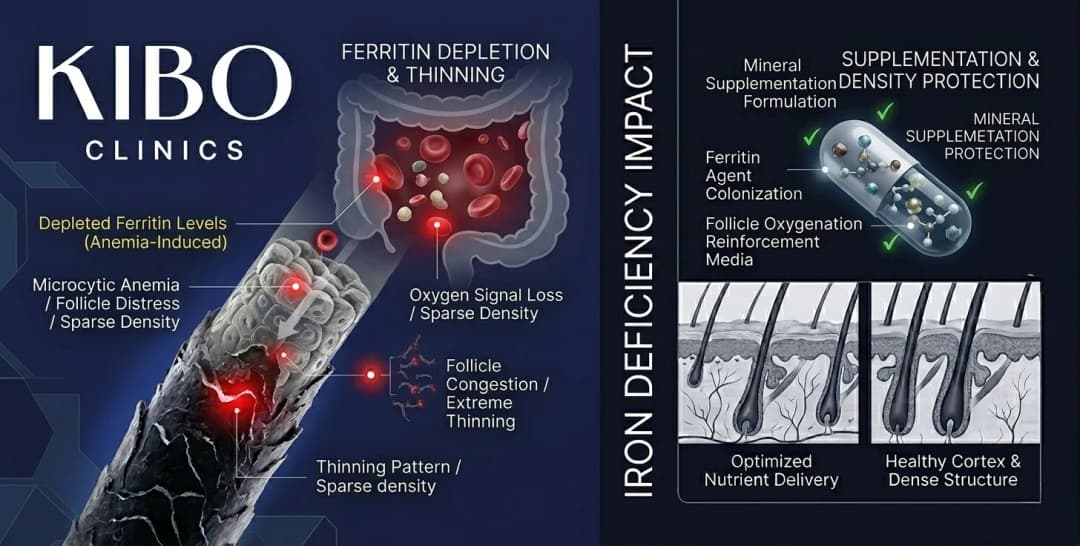
You notice more strands on your pillow, in the shower drain, and on your comb. If your blood reports show low ferritin, iron deficiency could be slowing your hair growth cycle and causing thinning. Ferritin is the storage form of iron, and without enough of it, hair follicles struggle to produce strong, healthy strands.
Hair thinning linked to iron deficiency is common, especially in women, but many people miss it because haemoglobin can still be normal. Ferritin works quietly in the background, supporting oxygen delivery and cell division inside the hair bulb. When levels drop, follicles shift from active growth to resting phase faster. Understanding this link helps you act early and avoid long-term density loss.
A Story Many Women Relate To
Neha, 32, from Pune, started noticing widening of her hair parting after her second pregnancy. She blamed stress, new shampoo, even hard water. For six months, she tried home oils and supplements suggested by friends.
Her blood tests showed normal haemoglobin, so she assumed iron was fine. But a detailed panel revealed ferritin was 12 ng/mL, which is low for healthy hair growth. She had heavy periods and irregular meals after delivery, which slowly reduced her iron stores.
With guided iron supplementation, dietary correction, and scalp-focused therapies, shedding reduced in three months. Her density improved gradually over the next six to nine months. The key was identifying ferritin deficiency before considering advanced procedures.
What Is Ferritin and How Does It Affect Hair Growth?
Ferritin is a protein that stores iron inside your cells. Think of it as a reserve tank. Even if your haemoglobin looks normal, low ferritin means your body does not have enough backup iron for non-essential functions like hair growth.
Healthy scalp supports active follicles. Follicles are among the fastest dividing cells in the body. They need steady oxygen supply and nutrients to remain in the anagen (growth) phase.
When ferritin drops, the body prioritizes vital organs like heart and brain. Hair follicles receive less support. This pushes more hairs into telogen (resting phase), leading to diffuse thinning across the scalp.
Hormonal shifts, chronic stress, crash dieting, and blood loss worsen the problem. Over time, weak follicles produce thinner strands, and the overall volume reduces.
What Ferritin Level Is Considered Low for Hair?
For general health, ferritin below 15 ng/mL is often labeled deficient.
For hair growth, many specialists prefer levels above 40–70 ng/mL. Levels below this range may not cause severe anemia but can still trigger shedding.
Optimal range may vary by individual, age, gender, and underlying conditions. Testing and interpretation should always be clinical, not just numerical.
Why Does Iron Deficiency Cause Diffuse Hair Thinning?
Iron plays a central role in DNA synthesis and energy production inside the hair matrix cells.
Low iron reduces cellular activity.
Reduced activity shortens the growth phase.
Shortened growth phase increases shedding.
This type of hair loss is usually diffuse, meaning it affects the entire scalp rather than specific patches. It often overlaps with telogen effluvium.
Men can also experience iron-related shedding, though it is more common in women due to menstrual blood loss and pregnancy.
How Does Iron Deficiency Show in Men and Women?
Women often notice widening of the center parting and overall volume reduction. Postpartum women and those with heavy periods are at higher risk.
Men may see general thinning along with fatigue. If a man already has genetic pattern baldness, iron deficiency can accelerate visible density loss.
In teenage girls, strict dieting can trigger early thinning due to low ferritin.
In older adults, poor absorption and digestive issues can contribute to declining iron stores.
| Factor | Women | Men |
|---|---|---|
| Common Trigger | Menstruation, pregnancy, dieting | Poor diet, gut issues |
| Pattern | Diffuse thinning, widening part | Overall thinning with existing pattern loss |
| Progression | Gradual but noticeable after stress events | Often masked by genetic hair loss |
What Daily Habits Make It Better or Worse?
Skipping meals reduces iron intake and worsens ferritin levels.
Crash dieting and extreme calorie restriction accelerate shedding.
Drinking tea or coffee immediately after iron-rich meals reduces absorption.
Heavy menstrual bleeding without medical guidance depletes iron stores over time.
Including iron-rich foods like spinach, lentils, red meat, and jaggery helps maintain levels.
Pairing iron sources with vitamin C improves absorption.
Avoid self-prescribing high-dose supplements, as excess iron can cause digestive issues and toxicity.
What Helps First? (Relief Steps)
First step is blood testing, including ferritin, haemoglobin, and vitamin B12.
If ferritin is low, supervised iron supplementation is usually advised.
Diet correction supports long-term stability.
Shedding often reduces within 8–12 weeks after levels improve.
Visible density improvement takes 4–9 months, depending on follicle health.
Scalp-support therapies like PRP may help strengthen recovering follicles in selected cases.
When to Meet a Hair Specialist
Hair shedding lasting more than three months needs evaluation.
Ferritin below 30 ng/mL with visible thinning requires medical correction.
Sudden, excessive shedding after illness, childbirth, or surgery needs assessment.
Associated symptoms like extreme fatigue, brittle nails, or pale skin suggest systemic deficiency.
If hair does not improve despite corrected ferritin, other causes like thyroid imbalance or genetic pattern hair loss must be ruled out.
Common Myths About Iron Deficiency and Hair Loss
Myth 1: Normal haemoglobin means iron is fine.
Ferritin can be low even when haemoglobin is normal.
Myth 2: Hair loss stops immediately after taking iron tablets.
Follicles need time to restart the growth cycle.
Myth 3: More iron means faster hair growth.
Excess iron can harm organs and does not speed up hair recovery.
Myth 4: Only women get iron-related hair thinning.
Men with poor diet or gut disorders can also develop it.
Why Kibo Clinics for Iron-Related Hair Thinning
Many patients choose Kibo Clinics for iron-related hair thinning because our approach addresses both active shedding and long-term density planning. We begin with comprehensive scalp assessment, hair and follicle analysis, and thorough lifestyle and environmental review.
Our No Ghost Surgery pledge ensures the consulting surgeon personally performs your entire procedure, maintaining consistent quality throughout the session. We don't delegate critical steps to technicians.
The Kibo Hair Analysis (scalp and follicle assessment) is the first step in understanding your specific condition. We provide education, guidance, and support without guarantees, exaggerated claims, or miracle cure promises.
Our 12-month monitoring program tracks shedding patterns, nutritional correction progress, and follicle response. If needed, we combine medical therapy with PRP, IV hair boosters, or surgical planning in advanced cases, only after stabilizing internal deficiencies.
---
Check Your Ferritin Before You Blame Your Shampoo---
Frequently Asked Questions
What ferritin level is ideal for hair growth?
For general health, ferritin above 15 ng/mL may be acceptable. For hair growth, many specialists prefer levels above 40–70 ng/mL. The ideal number varies by individual. Raising levels too high without supervision can cause side effects, so balance is necessary.
Can low ferritin cause hair loss without anemia?
Yes. You can have normal haemoglobin but low ferritin. In such cases, hair thinning may occur before anemia develops. Early detection prevents prolonged shedding.
How long does it take for hair to regrow after iron treatment?
Shedding may reduce in 2–3 months. Visible regrowth usually takes 4–9 months. Full density recovery depends on how long deficiency existed and whether follicles remain active.
Should I take iron supplements without testing?
No. Iron overload can damage the liver and cause digestive discomfort. Testing confirms deficiency and helps determine proper dosage.
Does iron deficiency cause permanent hair loss?
In most cases, it causes temporary diffuse thinning. If corrected early, follicles recover. Long-standing deficiency combined with genetic hair loss may reduce full recovery potential.
Are vegetarians at higher risk of low ferritin?
Yes, plant-based iron is less easily absorbed. However, proper planning with vitamin C pairing can maintain adequate levels.
Can men with pattern baldness also have low ferritin?
Yes. Iron deficiency can worsen visible thinning in men already experiencing genetic hair loss. Treating deficiency may improve overall density but does not reverse genetic baldness.
Is PRP helpful if ferritin is low?
PRP may support follicle strength, but correcting internal deficiency is essential first. Without adequate iron stores, results may be limited.
Disclaimer
This content is for informational purposes only and does not substitute personalized medical advice. Ferritin levels, hair response, and treatment outcomes vary between individuals. Supplementation and therapies must be guided by qualified professionals. No treatment guarantees complete hair restoration, and proper evaluation is required before starting any intervention.
Hair Transplant
Sapphire FUE | Direct Hair Transplant | Bio FUE | Corrective Transplant
Hair Regrowth
PRP Therapy | GFC Therapy | Mesotherapy | Microneedling
Must Read
Hair Transplant Guide | FUE Complete Guide | Procedure Steps | Results Timeline | Norwood Scale
Relevant Blogs
Hair Myths Busted | Hair Breakage Guide | DHT Blockers | Kibo Experience
---