
Menopause and Hair Density: Managing Hormonal Changes
Published on Sat Apr 11 2026
You may notice more hair in the shower drain or a wider parting line during menopause. Many women feel anxious about this change. Hair thinning during menopause is common and mainly linked to hormonal shifts, especially falling estrogen and progesterone levels that affect scalp health and hair growth cycles.
As periods become irregular and eventually stop, the body goes through major internal adjustments. Skin becomes drier, sleep patterns shift, and hair texture may change. For some women, the ponytail feels thinner. For others, the scalp becomes more visible under bright light. Understanding why this happens helps you respond early instead of waiting until density drops further.
A Story Many Women Share
Meera, a 48-year-old school teacher from Pune, first noticed extra hair on her pillow. She thought it was stress from work. Over six months, her hairline looked the same, but her parting widened. Her hair felt lighter when she tied it.
She tried changing shampoos and oiling more frequently. She even started taking over-the-counter biotin supplements. The shedding slowed slightly, but the thinning continued. Blood tests later showed she was entering menopause, and her estrogen levels were lower than before.
With proper scalp evaluation, nutritional correction, and targeted hair therapies, her shedding reduced. Over the next 8–10 months, her density improved gradually. The key was addressing hormones, scalp condition, and lifestyle together rather than relying on one product.
Why Does Hair Thin During Menopause?
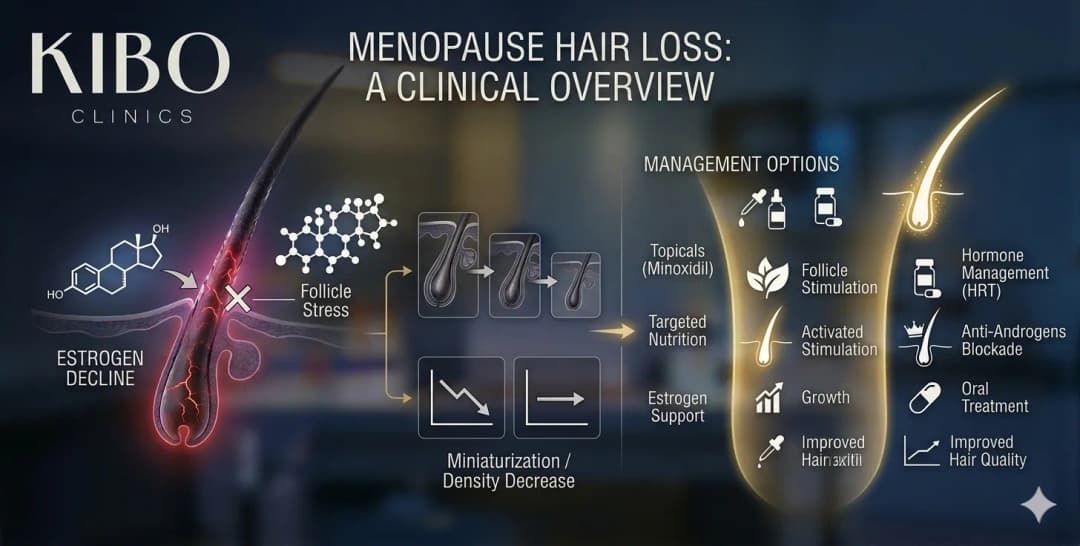
Hair thinning during menopause follows a clear biological pathway.
First, estrogen levels decline. Estrogen supports the anagen (growth) phase of hair. When levels fall, the growth phase becomes shorter. More hair shifts into the resting (telogen) phase, leading to increased shedding.
Second, relative androgen influence increases. Testosterone is present in women in small amounts. After menopause, as estrogen drops, the effect of androgens becomes more noticeable. In genetically sensitive follicles, this can cause gradual miniaturisation, especially along the crown and parting.
Third, scalp health changes. Reduced estrogen may decrease natural oil production. The scalp can become dry or inflamed. Poor scalp circulation and inflammation further weaken follicle function.
Finally, lifestyle and stress play a role. Sleep disturbance, weight gain, insulin resistance, and thyroid imbalance are more common in this stage. These factors directly affect follicle nutrition and growth signals.
Is It Permanent Hair Loss?
Not always.
If the thinning is mainly due to hormonal fluctuation and telogen effluvium, hair can regain density with correction and time. However, if female pattern hair loss begins, the change can be progressive without treatment. Early assessment helps differentiate between temporary shedding and pattern thinning.
What Are the Early Signs of Menopausal Hair Changes?
One early sign is increased shedding while washing or combing.
Another sign is widening of the central parting.
Some women notice reduced volume rather than visible bald patches.
Hair texture may become finer, drier, or more brittle.
In advanced cases, scalp visibility increases under bright light, especially over the crown.
These changes are usually gradual, not sudden.
How Does Menopause Affect Hair Density Compared to Normal Ageing?
| Factor | Normal Ageing | Menopause-Related Changes |
|---|---|---|
| Hormone Levels | Gradual decline | Sharp estrogen drop |
| Hair Shedding | Mild increase over years | Noticeable increase within months |
| Pattern | Overall thinning | Widened parting, crown thinning |
| Scalp Condition | Mild dryness | Dryness or sensitivity common |
How Does Menopause and Hair Density Show in Men and Women?
Men do not experience menopause, but they do go through gradual androgen-related hair thinning.
In women, the thinning is usually diffuse over the crown with preservation of the frontal hairline. The central part widens first.
In men, recession at the temples and bald spots on the crown are more typical.
Women often experience texture changes and dryness along with thinning, which is less common in men.
Emotional impact may also differ, as many women associate hair volume closely with identity and youthfulness.
What Daily Habits Make It Better or Worse?
Frequent heat styling worsens dryness and breakage. Brittle menopausal hair breaks easily, giving the appearance of faster thinning.
Crash dieting reduces protein intake. Hair is protein-based. Low protein weakens new growth.
High stress and poor sleep increase cortisol, which pushes more follicles into the resting phase.
Skipping scalp cleansing leads to buildup, which may block follicles and increase inflammation.
On the helpful side, a protein-rich balanced diet supports follicle repair.
Regular gentle scalp massage improves circulation.
Using mild shampoos suited for dry scalp reduces irritation.
Managing blood sugar and maintaining a healthy weight stabilises hormonal fluctuations.
What Helps First? (Relief Steps)
The first step is blood evaluation. Check thyroid function, iron levels, vitamin D, and hormonal profile if needed.
Second, improve nutrition. Include adequate protein, iron-rich foods, and omega-3 sources.
Third, consider topical treatments that support the growth phase under medical supervision.
Scalp-focused therapies like PRP or growth factor-based treatments may help improve follicle activity in suitable candidates.
Initial reduction in shedding may be noticed within 8–12 weeks.
Visible density improvement usually takes 6–12 months because hair growth is slow.
Consistency matters more than quick fixes.
When to Meet a Hair Specialist
Meet a specialist if shedding continues beyond three to four months.
Seek evaluation if you see rapid widening of the parting.
Consult if hair loss is accompanied by sudden weight gain, severe fatigue, or menstrual irregularity.
Patchy bald spots require immediate assessment to rule out autoimmune causes.
If over-the-counter products are not helping after six months, professional guidance prevents further density loss.
Common Myths About Menopause and Hair Density
Myth 1: Hair thinning after menopause cannot be treated.
Reality: Early intervention can slow progression and improve density in many cases.
Myth 2: Cutting hair short makes it grow thicker.
Reality: Hair thickness depends on follicle size, not haircut length.
Myth 3: Only women with family history lose hair after menopause.
Reality: Genetics increases risk, but hormonal and metabolic factors also contribute.
Myth 4: Oil alone can reverse hormonal hair loss.
Reality: Oil may improve scalp moisture but does not correct hormonal imbalance.
Why Kibo Clinics for Menopause-Related Hair Thinning
Many patients choose Kibo Clinics for menopause-related hair thinning because our approach addresses both density concerns and long-term planning. We begin with comprehensive scalp assessment, hair and follicle analysis, and thorough lifestyle and environmental review.
Our No Ghost Surgery pledge ensures the consulting surgeon personally performs your entire procedure, maintaining consistent quality throughout the session. We don't delegate critical steps to technicians.
The Kibo Hair Analysis (scalp and follicle assessment) is the first step in understanding your specific condition. We provide education, guidance, and support without guarantees, exaggerated claims, or miracle cure promises.
For patients who require advanced support, options may include PRP therapy, IV hair boosters, or hair transplant planning in carefully selected cases. We also provide structured 12-month monitoring to track progress, adjust treatments, and guide you through each stage of hormonal transition.
---
Take the first step toward understanding your hair changes with a scientific scalp assessment tailored to menopausal hair thinning.
---
Frequently Asked Questions
Does hair grow back after menopause?
Hair can regrow if thinning is due to temporary hormonal fluctuation or nutritional deficiency. However, if follicles shrink due to genetic sensitivity, regrowth may be limited without treatment. Early evaluation improves outcomes. Long-standing thinning is harder to reverse fully.
How long does menopausal hair shedding last?
Shedding may last 6–12 months during active hormonal transition. If it continues beyond that, underlying pattern hair loss may be developing. Proper diagnosis helps clarify the cause. Persistent shedding should not be ignored.
Is hormone replacement therapy helpful for hair?
Hormone therapy may help some women, but it is not prescribed only for hair loss. It carries risks and benefits that must be evaluated by a gynecologist. Hair improvement is not guaranteed. Individual response varies.
Are supplements enough to restore hair density?
Supplements help only if deficiency exists. Taking high doses without testing may not improve density. Balanced nutrition works better than random supplementation. Medical guidance prevents unnecessary intake.
Can PRP help menopausal hair thinning?
PRP may stimulate weak follicles and improve density in early stages. It works gradually over months and requires multiple sessions. Results vary based on follicle health. It is not a one-time permanent fix.
Will stress make menopausal hair loss worse?
Yes, chronic stress increases shedding by pushing follicles into the resting phase. Stress management supports overall recovery. However, stress is usually one part of the problem, not the only cause.
Is hair transplant safe after menopause?
Hair transplant can be considered if donor density is adequate and thinning is stable. It does not stop ongoing hormonal thinning in untreated areas. Proper planning is essential for natural results.
Can changing shampoo stop menopausal hair loss?
Shampoo can improve scalp health but cannot alter hormones. It may reduce breakage and dryness. For deeper thinning, medical evaluation is necessary.
Disclaimer
This content is for informational purposes only and does not substitute personalized medical advice. Menopause-related hair thinning varies by individual, and treatment responses differ. No therapy guarantees complete regrowth. Professional evaluation is required for accurate diagnosis and tailored management.
Hair Transplant
FUE Hair Transplant | Sapphire FUE | Direct Hair Transplant | Bio FUE | Corrective Transplant
Hair Regrowth
PRP Therapy | GFC Therapy | Mesotherapy | Microneedling
Must Read
Hair Transplant Guide | FUE Complete Guide | Procedure Steps | Results Timeline | Norwood Scale
Relevant Blogs
Hair Myths Busted | Hair Breakage Guide | DHT Blockers | Kibo Experience
---