
Minoxidil 5% vs 10%: Is Higher Concentration Always Better?
Published on Wed Mar 18 2026
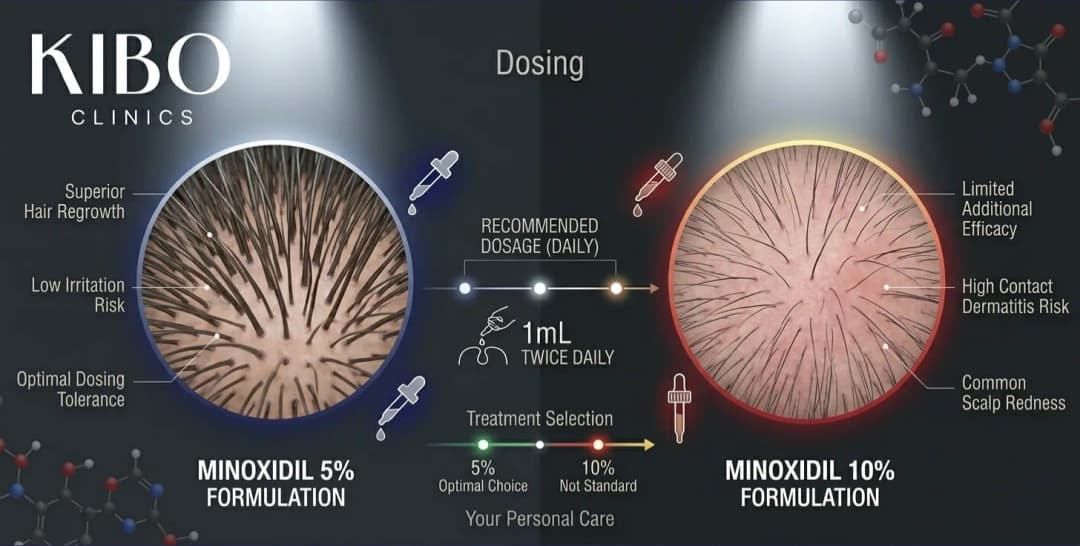
Vikram used 5% minoxidil for six months with modest results. "I see 10% minoxidil available now," he noted. "Is stronger necessarily better, or does the higher concentration just create more side effects?" Understanding minoxidil concentration differences helps you make informed decisions about treatment intensity.
How Minoxidil Works
Minoxidil prolongs the growth phase of hair cycles and may improve blood flow to follicles, though exact mechanisms remain partly unclear. The standard formulation has been 5% for men based on effectiveness studies, while 2% was originally recommended for women though many now use 5% as well.
The 10% Concentration Question
Limited research compares 10% directly to 5% minoxidil, with most evidence supporting 5% as the standard effective dose. Some small studies suggest 10% might provide modestly better results but with increased scalp irritation risk. The concentration increase from 5% to 10% represents doubling the active ingredient, potentially doubling side effects without necessarily doubling benefits.
Making the Choice
Most dermatologists recommend starting with 5% as it has the strongest evidence base and favorable side effect profile. If 5% provides some benefit but you want to maximize results, 10% represents one option though increased irritation may limit tolerability. Those experiencing significant scalp irritation with 5% should not escalate to 10% hoping for better results.
Frequently Asked Questions
Can lifestyle changes prevent hair loss?
Lifestyle modifications can slow progression and improve overall hair health, but genetic pattern baldness requires medical or surgical intervention.
How do I know if my hair loss is temporary?
Temporary shedding from stress, nutrition, or medication typically resolves within 6-9 months, while pattern baldness progresses steadily over years.
What vitamin deficiencies cause hair loss?
Iron, vitamin D, vitamin B12, and zinc deficiencies can contribute to hair thinning, though correction only helps if deficiency exists.
Should I use special shampoos for hair loss?
Medicated shampoos help scalp health but dont treat underlying hair loss. Focus on proven treatments like minoxidil or finasteride for actual regrowth.
How often should I wash thinning hair?
Wash as needed based on oil production, typically every 2-3 days. Washing frequency doesnt affect hair loss despite common myths.
Can stress cause permanent hair loss?
Acute stress triggers temporary shedding that resolves naturally. Chronic stress may accelerate genetic hair loss but doesnt solely cause permanent baldness.
Do hair growth supplements actually work?
Supplements only help if you have documented nutritional deficiency. For people with adequate nutrition, supplements provide minimal benefit.
Is thinning hair a sign of health problems?
Sometimes. Sudden significant shedding warrants blood work to check thyroid, iron, and other markers, though most hair loss is genetic.
What foods are best for hair health?
Protein-rich foods, iron sources like lean meat and spinach, and foods with zinc and biotin support hair health, but diet alone wont reverse genetic baldness.
Why Kibo Clinics
At Kibo Clinics, we guide patients through medication decisions including minoxidil concentrations based on individual response and tolerance rather than assuming more is always better. Our planning-first philosophy includes optimizing medical treatments before or alongside surgical options.
Disclaimer: This blog is for informational purposes only. Consult qualified healthcare providers for personalized medical advice.
Hair Regrowth Services
Bio Fue Hair Transplant | Unshaven Hair Transplant | Pdo Threads Hair Regrowth | Body Hair Transplant | Mesotherapy For Hair Regrowth | Iv Hair Boosters
Must Read
Best Hair Transplant In Lokhandwala | What Is Included In A Transparent Hair Transplant Quote | Best Hair Transplant In Powai | Winter Scalp Dryness Hydration | Fears Travel Hair Transplant Nashik | Hair Transplant Men Vs Women
Relevant Blogs
Cost Of Hair Transplant In Ahmedabad | Five Ways To Keep Your Hair Transplant Plans On Track With Kibo | How Seasonal Weather Affects Hair Shedding | Dermatologist Vs Trichologist | Microneedling For Hair Growth Dermapen Technology | Virat Kohli Hair Transplant Cricketers Hair Transplant Guide | Straighteners Curling Irons Hair Stress