
Seborrheic Dermatitis: Managing Chronic Scalp Flaking
Published on Wed Mar 18 2026
Anjali struggled with persistent scalp flaking that worsened during stress periods. "The flakes are greasy and yellowish, and my scalp feels inflamed," she described. "Is this still dandruff or something else?" Understanding seborrheic dermatitis helps you recognize this common condition and get appropriate treatment beyond basic dandruff shampoos.
What Seborrheic Dermatitis Is
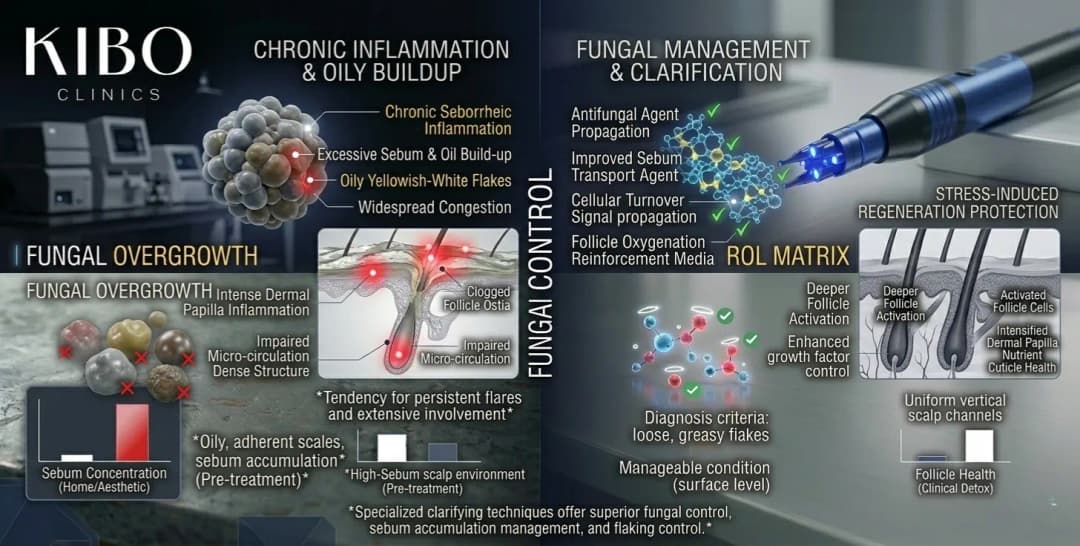
Seborrheic dermatitis is inflammatory scalp condition involving yeast overgrowth, excessive oil production, and immune response creating greasy, yellowish scales. It differs from simple dandruff in severity and the oily quality of flakes rather than dry white flakes typical of dandruff. The condition often affects areas beyond the scalp including eyebrows, sides of nose, and chest, suggesting systemic component rather than isolated scalp issue.
Treatment Approaches
Anti-fungal shampoos containing ketoconazole or selenium sulfide target the Malassezia yeast contributing to inflammation. Topical steroids control inflammation during flares but shouldn't be used continuously long-term. Addressing stress and overall health supports better control as seborrheic dermatitis often worsens during stress periods.
Frequently Asked Questions
Can lifestyle changes prevent hair loss?
Lifestyle modifications can slow progression and improve overall hair health, but genetic pattern baldness requires medical or surgical intervention.
How do I know if my hair loss is temporary?
Temporary shedding from stress, nutrition, or medication typically resolves within 6-9 months, while pattern baldness progresses steadily over years.
What vitamin deficiencies cause hair loss?
Iron, vitamin D, vitamin B12, and zinc deficiencies can contribute to hair thinning, though correction only helps if deficiency exists.
Should I use special shampoos for hair loss?
Medicated shampoos help scalp health but dont treat underlying hair loss. Focus on proven treatments like minoxidil or finasteride for actual regrowth.
How often should I wash thinning hair?
Wash as needed based on oil production, typically every 2-3 days. Washing frequency doesnt affect hair loss despite common myths.
Can stress cause permanent hair loss?
Acute stress triggers temporary shedding that resolves naturally. Chronic stress may accelerate genetic hair loss but doesnt solely cause permanent baldness.
Do hair growth supplements actually work?
Supplements only help if you have documented nutritional deficiency. For people with adequate nutrition, supplements provide minimal benefit.
Is thinning hair a sign of health problems?
Sometimes. Sudden significant shedding warrants blood work to check thyroid, iron, and other markers, though most hair loss is genetic.
What foods are best for hair health?
Protein-rich foods, iron sources like lean meat and spinach, and foods with zinc and biotin support hair health, but diet alone wont reverse genetic baldness.
Why Kibo Clinics
At Kibo Clinics, we recognize that scalp conditions like seborrheic dermatitis require management before or alongside hair restoration procedures. Our planning-first philosophy includes comprehensive scalp health assessment as part of hair loss evaluation.
Disclaimer: This blog is for informational purposes only. Consult qualified healthcare providers for personalized medical advice.
Hair Regrowth Services
Iv Hair Boosters | Sapphire Fue Hair Transplant | Unshaven Hair Transplant | Body Hair Transplant | Corrective Hair Transplant | Bio Fue Hair Transplant
Must Read
What Is Included In A Transparent Hair Transplant Quote | Air Conditioning Indoor Dryness Hair | Cost Of Hair Transplant In Gurgaon | Donor Scar Visibility Healing | Best Hair Transplant In Lokhandwala | Best Hair Transplant In Powai
Relevant Blogs
Fine Hair Traction Stress Risk | Hair Extensions Traction Alopecia Risk | Hard Water Hair Loss Mumbai | Pcos Hair Thinning Women Guide | Traveling After Hair Transplant | Straighteners Curling Irons Hair Stress | Hair Loss Types Symptoms Causes