
Summer Scalp Protection: How to Prevent Sunburn on Thinning Areas
Published on Sat Apr 11 2026
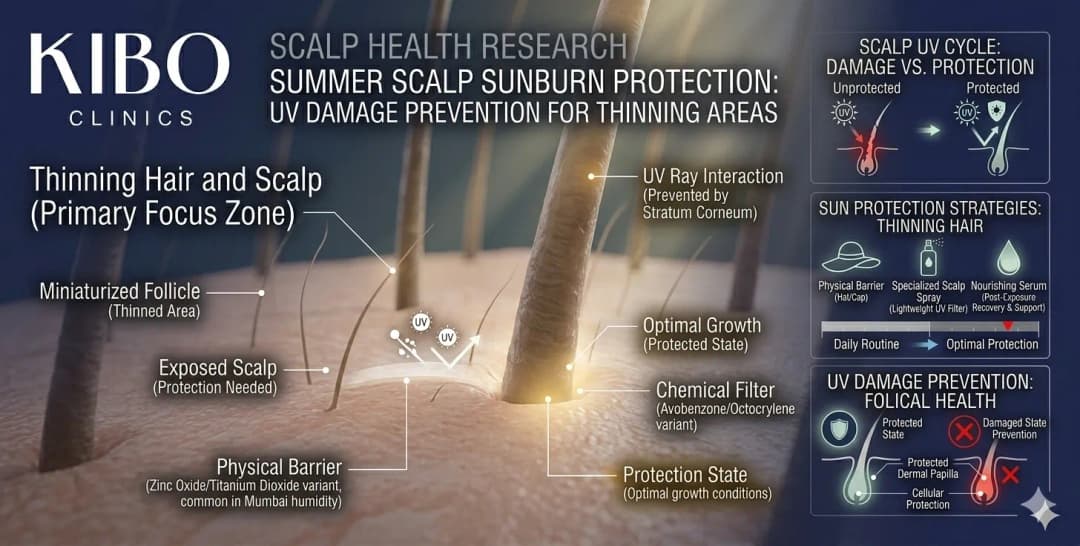
Your scalp feels hot, tight, and sore after a short time in the sun. If you have thinning hair, those exposed areas can burn faster than you expect. Scalp sunburn happens because reduced hair density allows UV rays to directly damage skin cells, causing redness, peeling, and long-term follicle stress.
When hair starts thinning, the scalp loses its natural shield. Many people protect their face and arms with sunscreen but forget the scalp until it starts itching or flaking. In Indian summers, UV levels are high enough to cause scalp damage in less than 20–30 minutes of peak exposure. Repeated sunburn does not just affect skin comfort; it can worsen hair thinning over time. Understanding how to prevent and manage scalp sunburn becomes essential, especially if you already notice widening part lines or visible crown areas.
A Summer Story: When Thinning Meets Harsh Sun
Rohit, 32, from Pune, had early crown thinning for two years. He managed it with a different hairstyle and did not think much about sun protection. During a beach holiday in Goa, he spent hours outdoors without a cap, assuming his remaining hair was enough.
By evening, his scalp felt painful and tight. Within two days, the crown area turned red and started peeling. Over the next month, he noticed increased hair shedding from the same spot. He panicked, thinking his balding had suddenly accelerated.
After clinical evaluation, it became clear that acute sunburn had inflamed his scalp. With proper soothing care, sun protection, and a structured hair plan, the shedding reduced. His case highlights a simple truth: thinning areas need the same protection as exposed skin.
Why Does the Scalp Burn Faster When Hair Is Thinning?
Scalp sunburn is not random. It follows a clear biological process.
Healthy scalp skin acts as a barrier. Hair strands provide shade and reduce direct UV penetration. When density decreases, ultraviolet (UVA and UVB) rays reach the scalp surface directly.
UV exposure damages skin cells. This triggers inflammation. Inflammation disrupts the microenvironment around hair follicles.
Hair follicles are sensitive mini-organs. When exposed to repeated inflammation, they may shift prematurely into a shedding phase. Over time, chronic sun damage can also affect collagen support around follicles.
Hormones and stress further influence this process. If someone already has androgenetic hair loss, follicles are genetically sensitive. Adding sun-induced inflammation can increase vulnerability.
Lifestyle factors such as outdoor work, biking without a helmet liner, swimming, or rooftop sports increase exposure time. Pollution combined with UV rays worsens oxidative stress on the scalp.
Does Sunburn Cause Permanent Hair Loss?
A single mild sunburn usually does not cause permanent hair loss. Hair shedding after sunburn is often temporary and related to inflammation.
However, repeated severe burns can damage deeper skin layers. Chronic UV damage may lead to long-term scalp changes, including thinning skin and reduced follicle support. Prevention is far easier than reversal.
What Are the Signs of Scalp Sunburn?
Scalp sunburn may be harder to see than facial sunburn, especially if some hair is present.
Redness on the part line or crown is an early sign.
Tenderness or burning sensation when touching or combing hair is common.
Itching and tightness may appear within hours.
Peeling or flaking usually develops after 2–3 days.
In severe cases, small blisters can form, requiring medical attention.
Both men and women with thinning at the hairline, temples, or crown are at risk. Women with widening central part lines often miss early redness because it blends with scalp tone.
How Does Scalp Sunburn Show in Men and Women?
Men often experience sunburn on the crown and receding hairline. These areas receive direct overhead sunlight. Short hairstyles provide less coverage, increasing exposure.
Women typically notice sunburn along the central parting or frontal thinning areas. Long hair may cover some regions, but fixed parting styles expose the same strip daily.
Men may report more visible redness. Women may first complain of itching or flaking without obvious redness.
In both genders, repeated sunburn can increase visible scalp contrast due to peeling and dryness.
What Daily Habits Make It Better or Worse?
Going out between 11 AM and 4 PM without protection increases UV damage.
Wearing tight helmets without breathable liners traps heat, worsening inflammation.
Using harsh shampoos immediately after sun exposure strips natural oils, increasing dryness.
Skipping scalp cleansing after sweating allows salt and pollutants to irritate burned skin.
On the helpful side, wearing wide-brim hats or caps creates physical UV barriers.
Using scalp-friendly sunscreen sprays or lotions on exposed areas reduces direct UV damage.
Changing your hair part occasionally prevents repeated burning on the same line.
Hydrating well supports skin repair from within.
Avoid applying heavy oils on freshly sunburned scalp. Oils can trap heat and worsen irritation in the acute phase.
What Helps First? (Relief Steps)
Move out of direct sunlight immediately once you notice burning.
Cool the scalp with normal-temperature water. Avoid ice directly on skin.
Apply soothing aloe vera gel or dermatologist-recommended calming lotion.
Use a mild, sulfate-free shampoo after 24 hours if needed.
Avoid hair coloring, chemical treatments, or heat styling for at least one week.
Mild sunburn improves within 3–5 days. Peeling may last up to a week. Shedding, if triggered, may appear 2–6 weeks later but is usually temporary.
If pain is severe or blisters appear, consult a doctor promptly.
When to Meet a Hair Specialist
Sunburn that causes blistering or intense pain needs medical evaluation.
If you notice sudden heavy hair shedding lasting more than six weeks after sun exposure, assessment is recommended.
Persistent redness, scaling, or patchy hair loss should not be ignored.
If thinning areas are increasing each summer, it may indicate underlying pattern hair loss requiring structured management.
Early consultation helps differentiate temporary shedding from progressive follicle miniaturization.
Common Myths About Scalp Sunburn
Myth 1: Hair always protects the scalp completely.
Truth: Thinning hair offers limited UV protection, especially at noon.
Myth 2: Only bald people get scalp sunburn.
Truth: Even mild thinning or wide part lines are enough for burns.
Myth 3: Applying oil prevents sunburn.
Truth: Oils do not block UV rays and may increase heat retention.
Myth 4: One bad sunburn permanently kills all hair follicles.
Truth: Most mild burns cause temporary inflammation, not permanent loss.
Myth 5: Cloudy days are safe.
Truth: UV rays penetrate clouds and still damage exposed scalp.
Why Kibo Clinics for Summer Scalp Protection and Thinning?
Many patients choose Kibo Clinics for thinning and scalp sensitivity because our approach addresses both active hair concerns and long-term planning. We begin with comprehensive scalp assessment, hair and follicle analysis, and thorough lifestyle and environmental review.
Our No Ghost Surgery pledge ensures the consulting surgeon personally performs your entire procedure, maintaining consistent quality throughout the session. We don't delegate critical steps to technicians.
The Kibo Hair Analysis (scalp and follicle assessment) is the first step in understanding your specific condition. We provide education, guidance, and support without guarantees, exaggerated claims, or miracle cure promises.
For patients with progressive thinning, options such as PRP therapy, IV hair boosters, low-level laser therapy, or FUE-based solutions may be discussed depending on scalp health. Every plan includes structured follow-up and 12-month monitoring to track response, seasonal shedding patterns, and scalp recovery.
---
Protect your scalp this summer before thinning areas worsen. Get a professional scalp assessment and personalized prevention plan.
---
Frequently Asked Questions
Can scalp sunburn increase hair fall?
Yes, temporary shedding can occur after inflammation from sunburn. This usually appears 2–6 weeks later and settles once the scalp heals. However, repeated burns may stress already weak follicles. Monitoring is important if shedding continues beyond two months.
How long does scalp sunburn take to heal?
Mild burns improve within 3–5 days. Peeling may last up to a week. Severe burns with blisters may take longer and require medical care. Healing time depends on skin type and exposure intensity.
Can I apply regular sunscreen on my scalp?
Yes, but choose lightweight, non-greasy formulas suitable for scalp skin. Spray or gel-based sunscreens are easier for thinning areas. Thick creams may make hair greasy and uncomfortable.
Does wearing a cap completely prevent scalp sunburn?
A thick, dark, tightly woven cap significantly reduces UV exposure. However, thin or mesh caps may not block all rays. Combining physical protection with sunscreen gives better safety.
Is scalp peeling after sunburn dangerous?
Peeling is part of skin healing. It is usually not dangerous if mild. Avoid scratching or picking flakes. Persistent scaling may need medical evaluation to rule out infection or dermatitis.
Can sunburn make pattern baldness worse?
Sunburn does not directly cause genetic baldness. However, inflammation can increase temporary shedding and stress follicles already sensitive to hormones. Protecting the scalp reduces this added stress.
Are women with long hair safe from scalp burns?
Not always. A fixed part line exposes the same scalp strip daily. If thinning exists, that area is vulnerable. Changing parting and using protection reduces risk.
Should I avoid oiling my hair in summer?
Oiling is not harmful generally, but applying heavy oil before direct sun exposure may trap heat. Light oiling at night with proper washing next day is usually safer.
Disclaimer
This content is for informational purposes only and does not substitute personalized medical advice. Scalp response to sun exposure varies by skin type, hair density, genetics, and overall health. Treatment outcomes differ between individuals. Professional consultation is necessary for persistent pain, blistering, or ongoing hair loss. No prevention or treatment method guarantees complete protection or permanent results.
Hair Transplant
FUE Hair Transplant | Sapphire FUE | Direct Hair Transplant | Bio FUE | Corrective Transplant
Hair Regrowth
PRP Therapy | GFC Therapy | Mesotherapy | Microneedling
Must Read
Hair Transplant Guide | FUE Complete Guide | Procedure Steps | Results Timeline | Norwood Scale
Relevant Blogs
Hair Myths Busted | Hair Breakage Guide | DHT Blockers | Kibo Experience
---