
Does Your Travel Pillow Cause Hair Breakage? Friction and Scalp Damage Explained
Published on Thu Apr 02 2026
Quick Summary
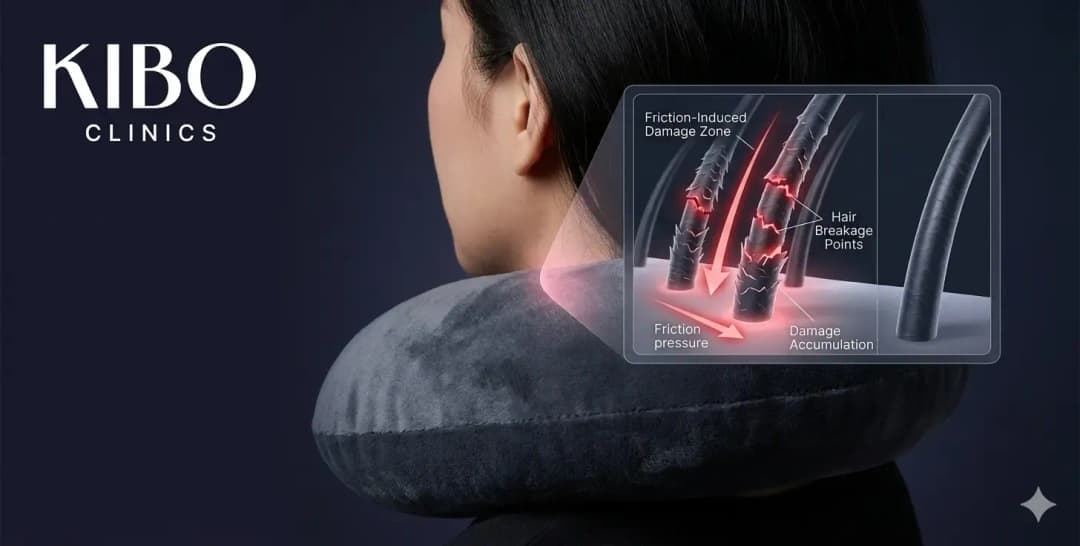
Sleeping position and pillow friction cause hair breakage and for frequent travellers using memory foam or polyester-covered neck pillows for hours on end, the nape and lower scalp are quietly accumulating friction stress, sweat buildup, and compressed micro-circulation that weakens hair shafts from the outside in. Travel pillows do not directly cause permanent baldness, but rough synthetic covers rubbing against hair for a 3-hour flight or a long car journey create the same cuticle damage pattern as aggressive towel drying just in a concentrated zone at the back of the head. The shedding feels mysterious because it appears days after travel, not during it, and most people never connect their neck cushion to the broken strands on their collar.
A Frequent Flyer's Story: Subtle Hair Changes After Travel
Ritika, 32, works in Mumbai and travels twice a month for client meetings. She always carries a U-shaped memory foam pillow for flights and long car rides. After a year of regular travel, she noticed thinning near the nape of her neck.
At first, she blamed stress and irregular sleep. She changed shampoos and started oiling her hair more often. But the breakage continued, especially at the back where the pillow pressed tightly for hours.
During a scalp assessment, she learned that constant friction, sweat buildup, and pressure were irritating her scalp and weakening hair shafts. With small changes in travel habits and targeted scalp care, the breakage reduced over the next few months.
How Do Travel Pillows Affect Your Hair and Scalp?
Hair damage from travel pillows usually happens through a stepwise process.
Scalp environment disruption — When your head rests against a cushion for hours, heat and sweat build up. Synthetic fabrics trap moisture. This creates a humid environment where the scalp becomes itchy, oily, or inflamed — similar to the scalp stress seen from office chair headrest pressure that accumulates across working hours.
Micro-circulation compression — Constant pressure reduces blood flow in small areas of the scalp. While this does not permanently shut down follicles, repeated compression weakens the hair growing from them over time.
Stress and hormonal compounding — Travel often disrupts sleep and increases cortisol levels. High cortisol can push more hair into the shedding phase, meaning the friction damage does not operate alone.
Fragile hair amplification — Dehydration during flights, dry cabin air, tight hairstyles, and chemical treatments all make hair more fragile. When already-fragile strands rub against rough synthetic fabric for hours, the breakage rate increases dramatically.
Does It Cause Permanent Hair Loss?
In most cases, no. Travel pillows cause frictional hair breakage, not genetic baldness. However, if someone already has androgenetic alopecia or weak follicles, repeated pressure and inflammation may worsen visible thinning in the nape and lower scalp area faster than would otherwise occur.
Travel Pillow Type vs Hair Damage Risk
| Pillow Type | Hair Impact | Key Reason | Risk Level |
|---|---|---|---|
| Rough polyester cover | High friction and static electricity buildup | Rough surface catches on lifted cuticle scales repeatedly | Medium |
| Velcro-adjustable pillow | Hair pulling and snagging at nape when adjusting | Velcro grips and yanks hair shafts mechanically | Medium to High |
| Inflatable plastic pillow | Traps sweat and heat against scalp | Non-breathable surface creates warm humid zone at nape | Medium |
| Pillow with seams or hard edges | Pressure point concentration at seam contact zones | Hard edges compress follicles in narrow lines repeatedly | Medium |
| Cotton cover pillow | Low friction; breathable; allows airflow | Natural fibre reduces static and allows moisture evaporation | Low |
| Satin cover pillow | Lowest friction of all common materials | Smooth surface allows hair to move without resistance or snagging | Lowest |
How Does Travel Pillow Hair Damage Show in Men and Women?
In men, breakage usually appears at the nape or lower back of the scalp. If male pattern baldness is already present, this area may look thinner faster because surrounding hair is already weak from hormonal miniaturisation — and friction accelerates the visible change.
In women, especially those with long hair, tangling and mid-shaft breakage are common. Tight ponytails combined with neck pillow pressure increase traction stress on already-compressed hair. Women with chemically treated or heat-styled hair may notice more split ends after travel because the cuticle layer is already compromised and less resistant to friction.
Men with short hair may feel scalp tenderness rather than visible breakage — the nape area feeling sore or sensitive after a long journey is a direct signal of pressure and friction stress.
What Daily Habits Make It Better or Worse?
Habits that worsen the problem:
- Sleeping with wet hair on any pillow — wet hair is structurally weaker and breaks far more easily under friction
- Using tight hairstyles during long journeys — adds traction stress on top of the compression from the neck pillow
- Not washing sweat buildup after travel — allows salt and oil to remain lodged around follicle openings, promoting inflammation
- Scratching itchy areas aggressively — creates micro-injuries that compound the friction damage already present
Habits that help:
- Keeping hair loosely tied in a low braid during travel — reduces tangling without adding tension stress
- Using a satin scarf between your hair and the pillow — the single most effective friction-reduction strategy available without buying a new pillow
- Staying hydrated during travel — supports scalp circulation and reduces the hair shaft brittleness that makes friction more damaging
- Washing the scalp after travel — removes sweat and oil buildup before they cause prolonged follicle irritation
For long-term protection, understanding how sleeping positions reduce hair friction applies the same friction-reduction principles to nightly sleep, not just travel.
What Helps First — Practical Relief Steps
Switch to a pillow with a removable cotton or satin cover. This is the highest-impact single change — reducing friction reduces the primary damage mechanism without requiring any other adjustment.
Keep hair dry before using a neck cushion. Wet hair under friction is significantly more vulnerable than dry hair under the same friction. Wait until hair is fully dry before extended travel.
After travel, wash the scalp to remove sweat and oil buildup from the journey. Use a gentle scalp serum if irritation or tenderness is present.
Most friction-related breakage improves within 6 to 12 weeks once the source is reduced. New hair growth cycles take about 3 months to show visible improvement in density or length.
For anyone experiencing thinning beyond surface breakage, hair breakage causes and treatments provides the diagnostic framework for distinguishing shaft damage from root-level loss.
When to See a Hair Specialist
Do not wait if you notice:
- Patchy bald spots at the nape that are not explained by breakage alone
- Persistent scalp redness, itching, or pain beyond a few days after travel
- Excessive shedding lasting more than 3 months
- Hair not regrowing in an area after 4 to 6 months — follicle damage should be assessed
- Rapid progression of thinning that does not respond to reducing friction
Early assessment prevents long-term weakening of follicles and differentiates friction-related breakage from other causes like telogen effluvium, androgenetic alopecia, or scalp inflammation that require separate treatment approaches.
Common Myths About Travel Pillow Hair Damage
Myth 1: Travel pillows cause permanent baldness. They usually cause frictional breakage, not follicle death. The hair shaft breaks — the follicle typically remains intact and can produce new hair once friction stops.
Myth 2: Only women are affected. Men experience scalp pressure and irritation too. Short hair makes breakage less visible but does not reduce the follicle-level stress from compression.
Myth 3: Expensive pillows are always safer. Material and friction coefficient matter more than price. A budget cotton-covered pillow causes less damage than an expensive memory foam pillow with a rough polyester cover.
Myth 4: Oiling heavily before travel protects hair. Too much oil can trap dust and increase scalp buildup during travel, worsening the environment around follicle openings.
Why Kibo Clinics
Many patients choose Kibo Clinics for hair thinning and breakage concerns because our approach addresses both scalp health and long-term follicle planning. We begin with comprehensive scalp assessment, hair and follicle analysis, and thorough lifestyle and environmental review — because travel-related friction damage and genetic thinning can coexist and require differentiated treatment strategies.
Our No Ghost Surgery pledge ensures the consulting surgeon personally performs your entire procedure, maintaining consistent quality throughout the session. We do not delegate critical steps to technicians.
The Kibo Hair Analysis (scalp and follicle assessment) is the first step in understanding your specific condition. We provide education, guidance, and support without guarantees, exaggerated claims, or miracle cure promises.
For patients where friction damage has created enough inflammation to warrant clinical support, treatments like PRP therapy or GFC therapy may be discussed. We monitor progress over 12 months with periodic reviews, adjusting scalp therapies, nutritional support, or advanced treatments when required.
If you have noticed thinning or breakage after frequent travel, a professional scalp assessment can clarify whether it is friction, stress shedding, or early pattern hair loss.
Frequently Asked Questions
Q: Can travel pillows cause hair fall? They usually cause hair breakage due to friction and pressure rather than true root-level hair fall. If shedding increases significantly after travel, other factors like stress hormones or dehydration may be contributing alongside friction. Assessment helps clarify the cause.
Q: Why does the back of my head feel sore after travel? Continuous pressure reduces micro-circulation temporarily in the compressed zone. This causes scalp tenderness after the pressure is released. If soreness persists beyond a few days, inflammation or follicle stress may be present and should be evaluated.
Q: Is satin better than cotton for travel pillows? Satin reduces friction more effectively due to its smooth, low-resistance surface. Cotton is breathable and significantly better than rough synthetic fabric. Both are preferable to polyester blends. For maximum protection during travel, a portable satin scarf wrapped around any pillow provides the benefit of satin without requiring a new pillow.
Q: Can neck pillows worsen pattern baldness? They do not cause genetic baldness. However, if follicles are already weakened by androgenetic alopecia, repeated friction and inflammation from poor-quality pillow covers may make thinning appear more noticeable in the affected zones sooner.
Q: Should I avoid tying my hair during flights? Avoid tight hairstyles. A loose braid or low ponytail reduces tangling without adding traction stress. Tight ponytails combined with neck pillow pressure create double mechanical stress on the same zones.
Q: How long does frictional hair damage take to heal? Hair shafts cannot repair once broken — they need to grow out. But new breakage can be prevented within days of removing the friction source. Visible density improvement from new growth takes 3 to 4 months of consistent protective habits.
Q: Can dehydration during flights cause hair fall? Dehydration affects scalp hydration and the structural integrity of hair shafts, making them more brittle and more vulnerable to friction damage. While it does not directly cause permanent hair loss, it amplifies the damage from other stressors like pillow friction and dry cabin air.
Q: When should I worry about nape hair thinning? If thinning progresses, forms a clear patch, or does not improve after reducing friction for 3 to 4 months, consult a specialist. Persistent nape thinning that does not respond to friction correction may indicate underlying follicle damage, scarring, or an unrelated medical cause.
Key Takeaways
- Does pillow cover cause hair fall? Yes — rough polyester and velcro-adjustable covers create friction damage at the nape and lower scalp; cotton and satin covers reduce this dramatically
- Travel pillows cause shaft breakage, not permanent follicle loss — the follicle remains intact in most cases, meaning breakage reverses once friction stops
- The satin scarf trick — wrapping a portable satin scarf around any neck pillow is the single most effective and practical friction-reduction strategy for frequent travellers
- Wet hair under pillow friction is the highest-risk combination — always travel with completely dry hair
- Breakage improving within 6 to 12 weeks of corrective habits confirms friction was the cause; breakage persisting beyond 3 months needs clinical scalp assessment
- Cotton pillowcase hair damage and travel pillow damage follow the same mechanism — the pillow material touching your hair for hours determines how much cuticle abrasion accumulates
Disclaimer
This content is for informational purposes only and does not substitute personalized medical advice. Hair breakage and thinning vary by individual, and treatment responses differ. Travel-related friction rarely causes permanent loss, but persistent shedding requires professional evaluation. No results are guaranteed without proper clinical assessment.
Hair Transplant
FUE Hair Transplant | Sapphire FUE Hair Transplant | Bio FUE Hair Transplant | Realtime FUE Hair Transplant | Direct Hair Transplant (DHT)
Hair Regrowth
PRP Therapy | GFC Therapy | IV Hair Boosters | Mesotherapy for Hair Regrowth | Microneedling for Hair Regrowth
Must Read
Hair Loss Types Symptoms Causes | Hair Breakage Causes Treatments | DHT Blockers Hair Loss Guide | Hair Transplant Good Or Bad | Understanding The Language Of Natural Hairline
Relevant Blogs
Hair Brushes Combs Scalp Stress | Hair Dryer Heat Follicle Safety | Straighteners and Curling Irons Hair Stress | Pollution Build Up Weakening Hair Roots | Scalp Oil Reducing Hair Friction