
Monsoon Hair Care: Preventing Fungal Infections and Excessive Fall
Published on Sat Apr 11 2026
That constant damp feeling on your scalp during monsoon can lead to itching, dandruff-like flakes, and sudden hair fall. If your hair feels heavier, oilier, and weaker in the rainy season, you are not imagining it. Monsoon humidity creates the perfect environment for fungal growth and temporary shedding, but the right care can control both.
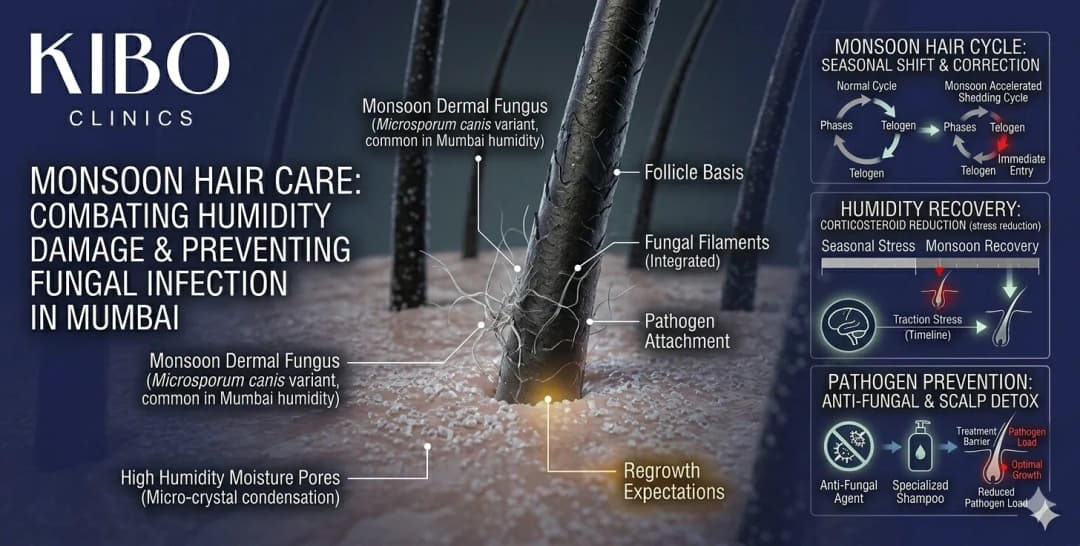
Rainwater, sweat, and pollution mix together during monsoon and sit on the scalp for longer hours. High humidity prevents sweat from evaporating, making the scalp moist and warm. This weakens hair roots, disturbs scalp balance, and may trigger infections that increase hair fall. With early attention, most seasonal hair concerns can be managed effectively.
Why Does Hair Fall Increase During Monsoon?
Ritika, 29, from Mumbai, noticed more hair strands on her pillow every July. She first thought it was stress from work. But soon, her scalp became itchy and greasy by afternoon, even after morning shampoo.
Over the next few weeks, she tried changing shampoos frequently. Some reduced oil for a day, but itching continued. She started tying her hair tightly to manage frizz, which only worsened the shedding.
After a proper scalp evaluation, she learned that excess moisture had triggered fungal overgrowth and scalp inflammation. With medicated scalp care, controlled washing routine, and targeted treatments, her itching reduced in three weeks and hair fall gradually stabilised over two months.
What Causes Fungal Infections and Hair Fall in Monsoon?
Monsoon hair fall usually begins at the scalp level.
When the scalp remains damp for long hours, natural oils mix with sweat and dirt. This blocks follicles and disturbs the scalp’s microbiome. Fungi such as Malassezia thrive in warm, moist conditions, leading to itching, flakes, and irritation.
Inflamed scalp affects follicle function. When follicles are irritated, the hair growth cycle shifts prematurely into the shedding phase. This increases daily hair fall.
Humidity also makes hair shafts absorb excess moisture from the air. This weakens the cuticle, causes frizz, and increases breakage.
Stress, irregular sleep, and poor nutrition during seasonal changes can further worsen shedding. Hormonal fluctuations, especially in women with PCOS or thyroid imbalance, may make monsoon hair fall more noticeable.
How Does Scalp Inflammation Trigger Shedding?
Inflammation reduces blood flow and nutrient supply to the follicle.
When this continues for weeks, hair roots become weaker and enter the resting phase earlier than normal. This is called telogen effluvium. If untreated, repeated inflammation may thin out hair density over time.
How Can You Prevent Fungal Scalp Infections During Rainy Season?
Prevention starts with keeping the scalp clean and dry.
Wash your hair regularly based on your scalp type. Oily scalp may require washing three times a week during monsoon. Dry scalp may need gentler but consistent cleansing.
Dry your scalp completely after washing. Leaving it damp, especially near the roots, increases fungal growth risk.
Avoid sharing towels, combs, or helmets. Fungal infections spread easily in moist environments.
If you get drenched in rainwater, rinse your hair with clean water and mild shampoo as soon as possible. Rainwater often contains pollutants and microbes.
Do not sleep with wet hair. Overnight dampness can worsen itching and scalp irritation.
How Does Monsoon Hair Fall Show in Men and Women?
In men, monsoon shedding often exaggerates existing male pattern baldness. Thinning at the crown or temples may look more prominent due to added seasonal fall.
Men who wear helmets daily may experience more scalp sweating. Poor helmet hygiene can increase fungal infections and dandruff.
In women, hair fall may appear as overall thinning rather than a receding hairline. Women with long hair notice more strands during combing and washing, which can feel alarming.
Women with hormonal imbalance, PCOS, or postpartum changes may see a sharper increase in seasonal shedding.
Both genders can experience itching, flakes, scalp redness, and increased breakage during this season.
| Concern | Men | Women |
|---|---|---|
| Common Pattern | Crown and temple thinning | Diffuse overall thinning |
| Trigger Factors | Helmet sweat, pattern baldness | Hormonal imbalance, long hair breakage |
| Visible Signs | Wider hairline, itchy scalp | Heavy shedding during wash |
What Daily Habits Make It Better or Worse?
Worse habits include tying wet hair tightly. This causes traction and fungal buildup.
Over-oiling the scalp and leaving oil overnight during humid weather can clog follicles and worsen dandruff.
Using very hot water strips natural oils and triggers rebound oil production.
Helpful habits include using a mild antifungal or medicated shampoo if advised.
Keeping pillow covers and towels clean reduces microbial growth.
Eating protein-rich foods supports follicle strength from within.
Avoid frequent chemical treatments during monsoon. Wet hair is more vulnerable to damage.
What Helps First? (Relief Steps)
Start by controlling scalp moisture.
Use a clinically recommended anti-dandruff or antifungal shampoo two to three times weekly.
Gently massage the scalp to improve circulation without scratching.
Keep hair trimmed if it is very long and difficult to manage in humidity.
Improve nutrition with adequate protein, iron, zinc, and vitamin D.
In mild cases, itching reduces within two weeks. Shedding usually stabilises in four to eight weeks once scalp health improves.
If hair fall continues beyond three months, it may not be seasonal and needs evaluation.
When to Meet a Hair Specialist
Consult a specialist if itching becomes intense or painful.
Seek medical advice if you notice patchy bald spots, thick crusts, or pus-filled lesions.
If hair fall exceeds 150–200 strands daily for more than two months, further evaluation is needed.
People with thyroid issues, PCOS, or recent illness should not ignore prolonged shedding.
Early diagnosis prevents chronic scalp conditions and long-term thinning.
Common Myths About Monsoon Hair Fall
Myth 1: Cutting hair short stops hair fall.
Hair length does not affect root strength. Hair fall starts at the follicle level.
Myth 2: Oil alone can cure fungal infection.
Oil may soothe dryness but does not treat fungal overgrowth. In some cases, it worsens it.
Myth 3: Hair fall in monsoon is always permanent.
Seasonal shedding is usually temporary if scalp health is restored early.
Myth 4: Daily shampoo damages hair.
Using the right shampoo suited to your scalp type is safer than leaving sweat and dirt accumulated.
Why Kibo Clinics for Monsoon Hair Concerns
Many patients choose Kibo Clinics for seasonal hair fall and scalp infections because our approach addresses both scalp health and long-term hair planning. We begin with comprehensive scalp assessment, hair and follicle analysis, and thorough lifestyle and environmental review.
Our No Ghost Surgery pledge ensures the consulting surgeon personally performs your entire procedure, maintaining consistent quality throughout the session. We don't delegate critical steps to technicians.
The Kibo Hair Analysis (scalp and follicle assessment) is the first step in understanding your specific condition. We provide education, guidance, and support without guarantees, exaggerated claims, or miracle cure promises.
Patients undergoing treatments such as PRP therapy or supportive hair procedures are monitored for up to 12 months. Regular follow-ups help track progress, adjust care plans, and manage seasonal flare-ups before they worsen.
---
Protect your scalp this monsoon before temporary shedding turns into long-term thinning.
---
Frequently Asked Questions
Does monsoon really increase hair fall?
Yes, many people notice temporary shedding during monsoon due to humidity and scalp inflammation. Moisture weakens hair shafts and irritates follicles. However, this is usually seasonal. If shedding continues beyond three months, it may indicate another condition.
How do I know if I have a fungal scalp infection?
Common signs include itching, greasy flakes, redness, and sometimes small painful bumps. The scalp may feel sore. Mild cases resemble dandruff. A specialist evaluation confirms the diagnosis.
Can I oil my hair during monsoon?
Light oiling for a short duration before washing is acceptable for dry scalp. Leaving heavy oil overnight in humid weather may worsen fungal growth. Balance and scalp type matter.
How often should I wash my hair in rainy season?
Oily scalp may need washing two to three times weekly. Dry scalp may need less frequent washing with mild products. The goal is to prevent buildup without over-drying.
Is rainwater harmful for hair?
Rainwater can carry pollutants and microbes, especially in urban areas. Occasional exposure is not severe, but repeated soaking without washing can irritate the scalp.
Can PRP therapy help with seasonal hair fall?
PRP therapy may support follicle strength and improve scalp health. It is more effective for pattern hair loss than purely seasonal shedding. Results vary, and multiple sessions are usually required.
When does seasonal hair fall stop?
For most people, shedding reduces within four to eight weeks once scalp health improves. Persistent shedding beyond three months requires medical evaluation.
Does wearing a helmet worsen fungal infection?
Sweaty helmets can create a humid environment that promotes fungal growth. Keeping helmet lining clean and allowing scalp to dry reduces risk.
Disclaimer
This content is for informational purposes only and does not substitute personalized medical advice. Seasonal hair fall and fungal infections vary in severity. Treatment responses differ based on scalp type, medical history, and underlying conditions. Professional consultation is recommended for persistent or severe symptoms.
Hair Transplant
FUE Hair Transplant | Sapphire FUE | Direct Hair Transplant | Bio FUE | Corrective Transplant
Hair Regrowth
GFC Therapy | Mesotherapy | Microneedling | IV Hair Boosters
Must Read
Hair Transplant Guide | FUE Complete Guide | Procedure Steps | Results Timeline | Norwood Scale
Relevant Blogs
Hair Myths Busted | Protective Hairstyles | Hair Breakage Guide | DHT Blockers | Kibo Experience
---