
Scalp Sensitivity and Hair Pull Tolerance: When Tight Styles Damage Follicles
Published on Fri Apr 03 2026
Quick Summary
Scalp sensitivity lowers your hair pull tolerance the threshold at which tension from combing, tying, or styling triggers pain and follicle inflammation. When this threshold drops due to scalp inflammation, DHT sensitivity, dandruff, or chronic stress, even a moderate ponytail creates enough nerve irritation and vascular compression to produce the same follicle damage that only extreme traction would cause on a healthy scalp. The pain is not just discomfort it is a reliable early warning that repeated tension is crossing from safe styling into active follicle stress that, left unaddressed, progresses to traction alopecia.
Why Does a Simple Hairstyle Hurt So Much?
Riya, 29, from Pune, always loved sleek high ponytails for work. But over the last year, she noticed something strange. Within an hour of tying her hair, her scalp would feel sore and tender. By evening, she had headaches and visible hair fall while removing the band.
At first, she blamed stress. She switched shampoos and oils, but the pain continued. Gradually, she started seeing thinning near her temples. What she thought was "normal sensitivity" turned out to be low hair pull tolerance due to scalp inflammation and early traction stress.
Once she reduced tight styling, improved scalp care, and started targeted treatment, her discomfort reduced within weeks. Her shedding slowed, and her temples stabilised over the next few months.
What Is Hair Pull Tolerance and Why Does It Matter?
Hair pull tolerance refers to how much tension your scalp and hair follicles can handle before pain, inflammation, or hair damage occurs.
Healthy scalp barrier — the baseline — Balanced sebum levels and scalp hydration cushion follicles against mild tension. When this barrier is intact, moderate styling forces pass through without triggering nerve responses or follicle stress.
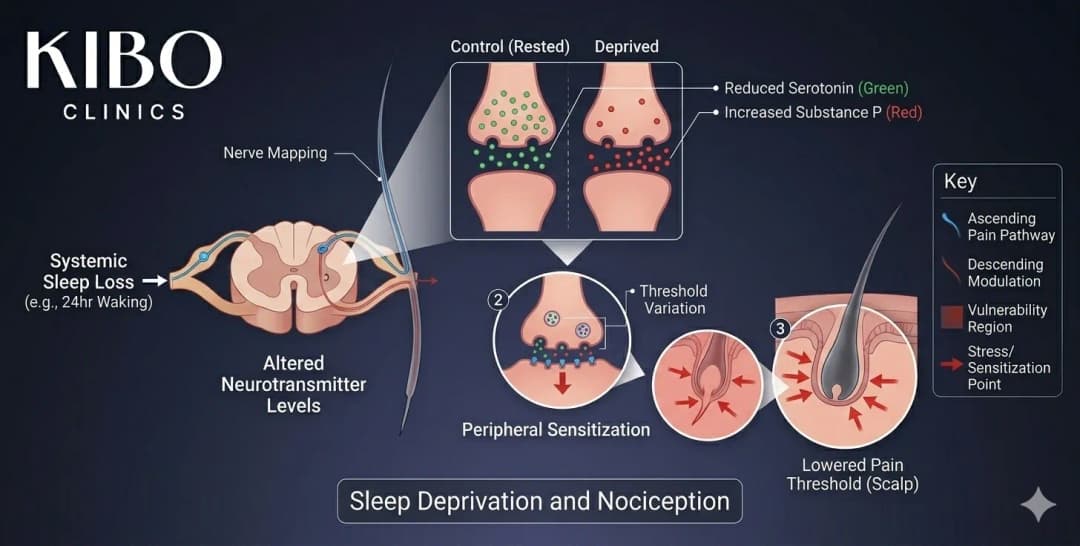
Inflamed scalp — lowered threshold — If the scalp becomes inflamed, dry, or overly oily, the nerve endings surrounding each follicle become more reactive. Even small pulling forces then trigger pain — not because the pulling is stronger, but because the pain threshold has dropped.
Hormones and stress — High cortisol increases nerve reactivity and reduces blood flow to follicles. This makes hair roots simultaneously weaker and more sensitive to the same tension they previously tolerated without issue.
Lifestyle and environment — Pollution, harsh shampoos, tight hairstyles, and excessive heat styling further irritate the scalp over time, progressively lowering tolerance until styling that once felt normal begins causing pain within minutes.
Can Low Hair Pull Tolerance Lead to Hair Loss?
Yes. When tension is repeated daily — tight braids, buns, extensions, helmets — the constant pulling inflames follicles. If this continues for months, follicles shrink. This condition is traction alopecia. In early stages the process is reversible. Once scarring develops, regrowth becomes difficult. Understanding scalp sensitivity early is what determines whether intervention happens before or after that threshold is crossed.
The direct connection between repeated mechanical tension and follicle anchoring failure is explained in detail in hair follicle anchoring and root weakness.
Scalp Sensitivity — Causes and Impact on Hair Pull Tolerance
| Cause | How It Lowers Tolerance | Common Signs | Recovery Timeline |
|---|---|---|---|
| Scalp inflammation | Inflamed skin sensitises nerve endings surrounding follicles — pain threshold drops | Redness, tenderness on touch, soreness after mild styling | 2–4 weeks with anti-inflammatory care and tension reduction |
| DHT scalp sensitivity | Miniaturising follicles have weaker anchoring — tension that was previously safe now stresses compromised roots | Scalp tenderness in temple and crown zones alongside visible thinning | Requires ongoing DHT management; sensitivity reduces as follicles stabilise |
| Dandruff / seborrheic dermatitis | Chronic low-grade scalp inflammation from fungal overgrowth increases nerve reactivity across the entire scalp surface | Itching, flaking, pain when combing; worsens with oily scalp conditions | 3–6 weeks with antifungal treatment and scalp balance restoration |
| Chronic stress (high cortisol) | Cortisol increases nerve sensitivity and reduces scalp blood flow — follicles become weaker and more tension-reactive simultaneously | Scalp sensitivity increasing during stressful periods; headaches after tight styles | Gradual improvement over 6–12 weeks as stress management takes effect |
| Stripping of scalp barrier | Harsh shampoos remove protective sebum — exposed scalp skin and follicle openings become hypersensitive to mechanical stress | Tight, dry scalp feel after washing; increased sensitivity in first hour post-wash | 1–2 weeks after switching to mild pH-balanced cleanser |
| Accumulated traction damage | Months of daily tight styling progressively damages follicle anchoring — each styling session now operates on already-stressed roots | Pain begins earlier in the day; temple and hairline thinning alongside tenderness | 3–6 months of tension-free recovery; scarred follicles may not recover |
How Does Scalp Sensitivity Show in Men and Women?
In women, sensitivity often appears along the hairline, temples, or where hair is tied tightly. High ponytails, braids, and hair extensions are common triggers — producing burning, tenderness, or pain when combing that begins within minutes of tying. Women may also experience cyclical sensitivity during hormonal changes such as menstruation or postpartum periods, when the scalp barrier is additionally compromised.
In men, sensitivity is often noticed during oil massage, combing, or after extended helmet use. Men with early pattern thinning may feel increased tenderness in affected zones because follicles that are already miniaturising from DHT have weakened anchoring and lower mechanical tolerance. Men may also notice sensitivity alongside dandruff or seborrheic dermatitis — both of which independently lower the scalp's pain threshold.
What Daily Habits Make It Better or Worse?
Habits that worsen scalp sensitivity:
- Tight hairstyles maintained throughout the day — follicles need tension-free recovery time that constant tight styling never allows
- Over-washing with strong shampoos — strips natural oils and weakens the scalp barrier, increasing nerve exposure to mechanical stress
- Aggressive oil massage on an already inflamed scalp — worsens inflammation instead of calming it; use fingertip pads only
- Frequent heat styling — dries the scalp and increases nerve sensitivity in the follicle zone
- Ignoring dandruff or itching — allows chronic inflammation to build progressively, lowering pull tolerance week by week
Habits that restore hair pull tolerance:
- Loose hairstyles — reduce constant tension and allow follicles to recover between styling sessions
- Mild pH-balanced shampoos — support the scalp barrier without stripping protective sebum
- Gentle fingertip massage — improves circulation without over-stressing reactive follicles; nails must never be used
- Stress management through sleep and exercise — reduces cortisol-driven nerve hypersensitivity
- Adequate protein and iron intake — supports stronger hair shaft structure that tolerates tension better before reaching the pain threshold
The correct approach to scalp oil balance for sensitive scalps is covered in scalp oil and hair friction reduction — maintaining sebum balance is one of the most direct ways to restore the barrier that protects nerve endings from mechanical stress.
What Helps First — Practical Relief Steps
Reduce mechanical stress first. Avoid tight ponytails, braids, and heavy extensions for at least 4 to 6 weeks. This single change removes the most direct trigger before any product or treatment can have meaningful effect.
Switch to soft fabric hair ties instead of elastic bands. The distribution of tension across a wider contact area reduces the concentrated pulling force at the hairline where sensitivity is typically highest.
Use lukewarm water for washing. Hot water increases scalp dryness and further strips the protective sebum layer that is already compromised in sensitive scalps.
Treat dandruff or scalp inflammation early with medical guidance rather than home remedies — these conditions compound sensitivity by maintaining a chronic low-grade inflammatory state that keeps nerve thresholds depressed regardless of styling changes.
For ongoing protection, understanding traction alopecia from tight hairstyles provides the framework for identifying exactly how much tension is too much for a sensitive scalp before visible damage occurs.
Most people notice reduced tenderness within 2 to 4 weeks after removing tension triggers. Visible reduction in hair fall may take 8 to 12 weeks, depending on follicle health.
When to See a Hair Specialist
Do not wait if you notice:
- Persistent scalp pain lasting more than 4 weeks despite removing tight styling
- Visible thinning along the hairline or temples
- Burning sensation without visible rash — may indicate nerve hypersensitivity or inflammation requiring clinical assessment
- Sudden excessive shedding alongside tenderness — may signal telogen effluvium or advanced traction stress
- Shiny, smooth patches where hair no longer grows — immediate consultation needed to rule out scarring alopecia
Early intervention makes the difference between reversible traction thinning and permanent follicle damage. The window for reversal is significantly shorter on a chronically sensitive scalp than on a healthy one.
Common Myths About Scalp Sensitivity
Myth 1: Pain means hair is growing stronger. Pain signals inflammation or nerve irritation, not stronger roots. Growth-related sensations are typically mild tingling — not the soreness and burning of traction stress.
Myth 2: Tight hairstyles make the hairline sharper. They may give a temporary lifted look but progressively increase traction alopecia risk. The cosmetic appearance of a sleeker line does not reflect the follicle damage accumulating underneath.
Myth 3: Oil massage fixes sensitivity. Aggressive massage on a reactive scalp worsens inflammation. Gentle fingertip pressure is appropriate; heavy rubbing with palms or nails is not.
Myth 4: Men do not get scalp sensitivity. Men experience it frequently — particularly those with dandruff, stress-related shedding, or early pattern thinning where DHT-affected follicles have reduced mechanical tolerance.
Why Kibo Clinics
Many patients choose Kibo Clinics for scalp sensitivity and traction-related thinning because our approach addresses both scalp health and long-term hair planning. We begin with comprehensive scalp assessment, hair and follicle analysis, and thorough lifestyle and environmental review — identifying whether sensitivity is from inflammation, DHT-driven follicle weakness, barrier disruption, or accumulated traction damage.
Our No Ghost Surgery pledge ensures the consulting surgeon personally performs your entire procedure, maintaining consistent quality throughout the session. We do not delegate critical steps to technicians.
The Kibo Hair Analysis (scalp and follicle assessment) is the first step in understanding your specific condition. We provide education, guidance, and support without guarantees, exaggerated claims, or miracle cure promises.
For patients needing advanced care, options may include PRP therapy, GFC therapy, or hair transplant procedures in stable cases. We also provide structured 12-month monitoring to track scalp recovery, density changes, and long-term maintenance strategies.
If your scalp hurts easily or your hairline feels strained, early action can prevent long-term thinning.
Frequently Asked Questions
Q: Why does my scalp hurt when I tie my hair? Tight hairstyles pull on hair shafts and stress follicles. If your scalp barrier is weak or inflamed, nerve endings become more sensitive and the pain threshold drops — so the same hairstyle that was once comfortable begins causing soreness within minutes. Reducing tension usually improves symptoms within 2 to 4 weeks.
Q: Can scalp sensitivity cause permanent hair loss? In early stages, hair loss due to traction is reversible. But long-term untreated traction on a sensitive scalp can cause follicle damage and scarring — at which point regrowth becomes limited regardless of treatment. Early intervention is significantly more effective than late-stage management.
Q: What is scalp sensitivity and what causes it? Scalp sensitivity is a lowered pain threshold where even mild styling tension, combing, or pressure triggers discomfort. It is caused by scalp inflammation, DHT-driven follicle miniaturisation, dandruff, chronic stress elevating cortisol, or stripping of the scalp's natural oil barrier — each reducing the cushion between mechanical force and nerve response.
Q: How to reduce DHT sensitivity in the scalp? DHT sensitivity in the scalp refers to the progressive weakening and miniaturisation of follicles that are genetically responsive to dihydrotestosterone. Reducing it requires either blocking DHT production or blocking its receptor binding at the follicle level — through medically supervised treatments like finasteride, dutasteride, or topical DHT blockers. Lifestyle interventions including stress reduction and anti-inflammatory diet support the process but do not substitute for clinical DHT management.
Q: Is PRP helpful for sensitive scalp conditions? PRP may improve scalp health by supporting blood flow and follicle activity — particularly useful when sensitivity is driven by follicle miniaturisation or inflammation. It is not a guaranteed solution and works best when inflammation and lifestyle tension triggers are also controlled simultaneously.
Q: How long does it take to improve hair pull tolerance? Mild cases driven by scalp barrier disruption or dandruff may improve in 2 to 4 weeks after removing triggers and starting appropriate care. Hair density recovery from traction stress takes 3 to 6 months depending on follicle condition and how long the tension was sustained.
Q: Should I stop oiling completely for scalp sensitivity? Not necessarily. Gentle light oil application can support scalp barrier health. The problem is aggressive massage or heavy oils on an already inflamed scalp — which worsens inflammation instead of calming it. Apply lightly with fingertip pads and cleanse within 30 to 60 minutes.
Key Takeaways
- Scalp sensitivity is a lowered pain threshold where normal styling tension crosses into active follicle inflammation — caused by scalp barrier disruption, dandruff, chronic stress, or DHT-driven follicle weakness
- What causes scalp pain and sensitivity — inflammation sensitises the nerve endings surrounding each follicle; anything that inflames the scalp (dandruff, harsh shampoos, tight styling, cortisol) directly lowers how much tension the scalp can tolerate before pain and follicle stress begin
- How to reduce DHT sensitivity in scalp — clinically through DHT-blocking medications; supportively through anti-inflammatory scalp care, tension reduction, and stress management
- Scalp tenderness during or after tight hairstyles is not a cosmetic complaint — it is an early warning sign of traction stress that, left unaddressed, progresses to traction alopecia
- Most sensitivity-driven shedding reduces within 8 to 12 weeks of corrective habits; sensitivity persisting beyond 4 weeks despite tension reduction needs professional assessment
- Shiny smooth scalp patches without follicle openings signal scarring alopecia — at this stage, delay in clinical consultation directly reduces recovery potential
Disclaimer
This content is for informational purposes only and does not substitute personalized medical advice. Scalp sensitivity and hair pull tolerance vary based on genetics, hormones, scalp conditions, and lifestyle. Treatment responses differ among individuals. Professional consultation is required for accurate diagnosis and management. No outcome is guaranteed.
Hair Transplant
FUE Hair Transplant | Sapphire FUE Hair Transplant | Bio FUE Hair Transplant | Realtime FUE Hair Transplant | Direct Hair Transplant (DHT)
Hair Regrowth
PRP Therapy | GFC Therapy | IV Hair Boosters | Mesotherapy for Hair Regrowth | Microneedling for Hair Regrowth
Must Read
Hair Loss Types Symptoms Causes | Hair Breakage Causes Treatments | DHT Blockers Hair Loss Guide | Hair Transplant Good Or Bad | Understanding The Language Of Natural Hairline
Relevant Blogs
Hair Brushes Combs Scalp Stress | Hair Dryer Heat Follicle Safety | Straighteners and Curling Irons Hair Stress | Pollution Build Up Weakening Hair Roots | Scalp Oil Reducing Hair Friction