
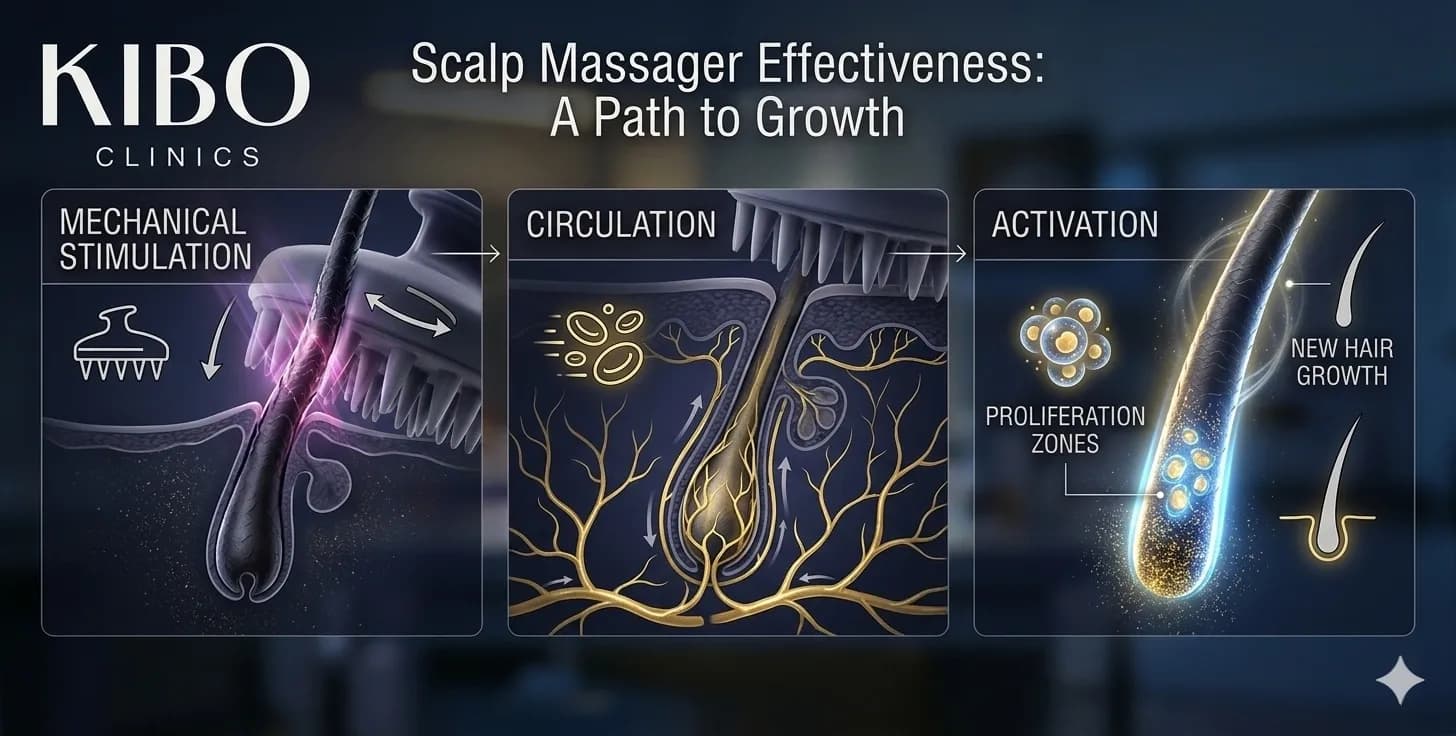
The gentle pressure of a scalp massager can feel relaxing, almost like a mini spa at home. If you are dealing with hair thinning, it is natural to wonder if this simple tool can actually stimulate new growth. Scalp massagers may improve blood circulation and scalp health, but they do not create new hair follicles on their own.
Many people in India search for easy, non-medical solutions before considering clinical treatments. Social media videos often show dramatic results, making it confusing to know what is real. The truth lies somewhere in between. Scalp massage can support healthier hair growth conditions, but its effect depends on the root cause of your hair loss. Understanding how hair grows will help you decide if this tool is worth your time.
A Simple Story: Rohan’s Experience with a Scalp Massager
Rohan, 32, from Pune, noticed gradual thinning near his temples. He was not ready for medical treatment and ordered a silicone scalp massager after seeing online reviews claiming “new hair growth in 30 days.”
He used it daily during shampoo for three months. He felt less scalp tightness and noticed reduced itching. However, the visible thinning at his hairline did not significantly change.
After consulting a specialist, he learned he had early-stage pattern hair loss. The massager had improved scalp circulation, but it could not reverse genetic miniaturisation. With a structured treatment plan and monitoring, he saw better results over the next year.
How Do Scalp Massagers Affect Hair Follicles?
Hair growth begins at the follicle level. Each follicle needs oxygen, nutrients, and a healthy scalp environment to function properly.
When you massage the scalp, you increase local blood circulation. Better blood flow means improved nutrient delivery to follicles. This can support follicles that are weak but still alive.
Healthy scalp skin also matters. If your scalp has product buildup, excess oil, or mild inflammation, it can disturb follicle function. Gentle massage may help exfoliation and reduce mild congestion.
However, if hair loss is driven by hormones like DHT in genetic pattern baldness, massage alone cannot stop follicle shrinkage. In such cases, follicles gradually miniaturise and produce thinner hair.
Stress is another factor. Chronic stress increases cortisol, which can push hair into the shedding phase. Massage may reduce stress levels indirectly, which can support overall hair health.
Does Massage Create New Hair Follicles?
No. Humans are born with a fixed number of hair follicles.
Scalp massage cannot generate new follicles. It can only improve the function of existing ones. If follicles are dormant but not destroyed, improved circulation may support better growth cycles.
If follicles are permanently damaged or scarred, massage will not revive them.
What Types of Hair Loss Might Benefit from Scalp Massage?
Scalp massagers may help in certain conditions more than others.
In telogen effluvium (stress-related shedding), improving scalp health and reducing stress may support recovery. However, the main solution remains identifying and correcting the trigger.
In early-stage thinning, improved circulation may slightly increase hair thickness over time. Results are usually subtle.
In androgenetic alopecia (male or female pattern hair loss), massage alone is insufficient. It can be used as a supportive habit along with medical or clinical treatments.
In scalp conditions like mild dandruff, massage during washing can improve product penetration and cleansing.
For advanced bald areas where follicles are no longer active, massage will not produce regrowth.
How Does Scalp Massage Show in Men and Women?
In men, hair loss often begins at the temples or crown due to genetic sensitivity to DHT. Massage may improve scalp flexibility and circulation but will not change the hormonal influence.
In women, thinning is usually diffuse across the scalp. Improved blood flow and stress reduction may slightly support volume if follicles are still active.
Women with postpartum hair shedding may find massage relaxing and helpful for scalp comfort, but the shedding phase typically resolves naturally over time.
Both men and women benefit more when massage is part of a broader scalp-care approach rather than a standalone solution.
What Daily Habits Make It Better or Worse?
Using a scalp massager too aggressively can irritate the scalp.
Applying excessive pressure may cause micro-inflammation, which can worsen shedding in sensitive individuals.
Massaging on a dry, tight scalp without oil or lubrication can create friction and break hair strands.
Using it during shampoo with gentle circular motions for 3–5 minutes is safer.
Combining massage with a healthy diet, proper sleep, and stress management improves overall results.
Ignoring underlying deficiencies like iron, vitamin D, or thyroid imbalance limits the benefit of massage.
What Helps First? (Relief Steps)
Start with gentle manual massage using fingertips for 5 minutes daily.
Use light circular motions without scratching.
If using a silicone massager, keep pressure moderate and avoid daily overuse in the beginning.
Maintain a clean scalp. Wash regularly based on your scalp type.
Results, if any, may appear as improved scalp comfort within weeks. Visible hair thickness changes, if they occur, may take 3–6 months and are usually mild.
Track progress with photos rather than relying on memory.
When to Meet a Hair Specialist
Hair shedding lasting more than three months needs evaluation.
Rapid hairline recession or visible scalp patches require professional assessment.
Severe itching, burning, or scalp pain should not be ignored.
If you have a family history of baldness and notice thinning before age 35, early guidance can help plan intervention.
Sudden hair fall after illness, surgery, or crash dieting also requires structured review.
Common Myths About Scalp Massagers
Scalp massage can regrow hair in bald areas.
Once follicles are inactive or destroyed, massage cannot revive them.
More pressure means better results.
Excess pressure can cause inflammation and worsen shedding.
Daily long sessions speed up growth.
Overstimulation may irritate the scalp. Consistency matters more than intensity.
Electric massagers work better than manual massage.
The main factor is circulation improvement. Tool type matters less than correct technique.
Natural methods are always enough.
Hair loss caused by hormones or medical conditions usually needs targeted treatment.
Why Kibo Clinics for Hair Thinning and Growth Planning
Many patients choose Kibo Clinics for hair thinning concerns because our approach addresses both scalp health and long-term hair planning. We begin with comprehensive scalp assessment, hair and follicle analysis, and thorough lifestyle and environmental review.
Our No Ghost Surgery pledge ensures the consulting surgeon personally performs your entire procedure, maintaining consistent quality throughout the session. We don't delegate critical steps to technicians.
The Kibo Hair Analysis (scalp and follicle assessment) is the first step in understanding your specific condition. We provide education, guidance, and support without guarantees, exaggerated claims, or miracle cure promises.
Patients enrolled in structured treatment programs receive 12-month monitoring and follow-up support. This helps track response, adjust protocols if required, and maintain realistic expectations.
---
Not sure if your thinning needs more than home remedies? Get your scalp analysed and understand your real growth potential.---
Frequently Asked Questions
Can scalp massage regrow hair naturally?
Scalp massage can improve blood flow and support healthier follicles. However, it cannot create new follicles or reverse advanced genetic baldness. Results, if any, are usually mild and gradual. It works best as a supportive habit rather than a primary treatment.
How long should I massage my scalp daily?
Around 5–10 minutes is sufficient. Longer sessions do not necessarily improve results. Excessive pressure or duration may irritate the scalp. Consistency over months is more important than intensity.
Is an electric scalp massager better than fingers?
Electric devices offer convenience and uniform motion. However, manual massage with correct technique can provide similar circulation benefits. The key factor is gentle pressure and regular practice.
Can scalp massage reduce hair fall?
It may help reduce stress-related shedding and improve scalp health. But if hair fall is caused by hormonal imbalance, nutritional deficiency, or genetics, massage alone is not enough. Identifying the root cause is essential.
Does scalp massage increase hair thickness?
Some small studies suggest slight increases in hair thickness after months of regular massage. The improvement is usually subtle. It does not dramatically change hair density in advanced thinning.
Can women use scalp massagers safely?
Yes, when used gently. Women with diffuse thinning may find it helpful for scalp comfort. However, underlying conditions like PCOS, thyroid issues, or iron deficiency should be addressed separately.
Are there side effects of scalp massagers?
Overuse can cause irritation, redness, or increased shedding in sensitive individuals. Using sharp or hard tools may damage the scalp. Gentle technique reduces risk.
Should I use oil while massaging?
Oil can reduce friction and nourish dry scalp skin. However, oil alone does not stimulate new follicle formation. Choose oils suitable for your scalp type and wash properly afterward.
Disclaimer
This content is for informational purposes only and does not substitute personalized medical advice. Hair growth varies based on genetics, hormones, health conditions, and lifestyle factors. Scalp massage may support scalp health but does not guarantee regrowth. Always consult a qualified professional for persistent or progressive hair loss.
Hair Transplant
FUE Hair Transplant | Sapphire FUE | Direct Hair Transplant | Bio FUE | Corrective Transplant
Hair Regrowth
PRP Therapy | GFC Therapy | Mesotherapy | Microneedling | IV Hair Boosters
Must Read
Hair Transplant Guide | FUE Complete Guide | Procedure Steps | Results Timeline | Norwood Scale
Relevant Blogs
Hair Myths Busted | Hair Breakage Guide | DHT Blockers | Kibo Experience
---
Medical Disclaimer : Information from Kibo Hair Clinics is for educational purposes only. It does not replace diagnosis, trichoscopy, blood test interpretation, prescription treatment, procedure advice, or side-effect counselling from a qualified dermatologist or hair restoration doctor.