
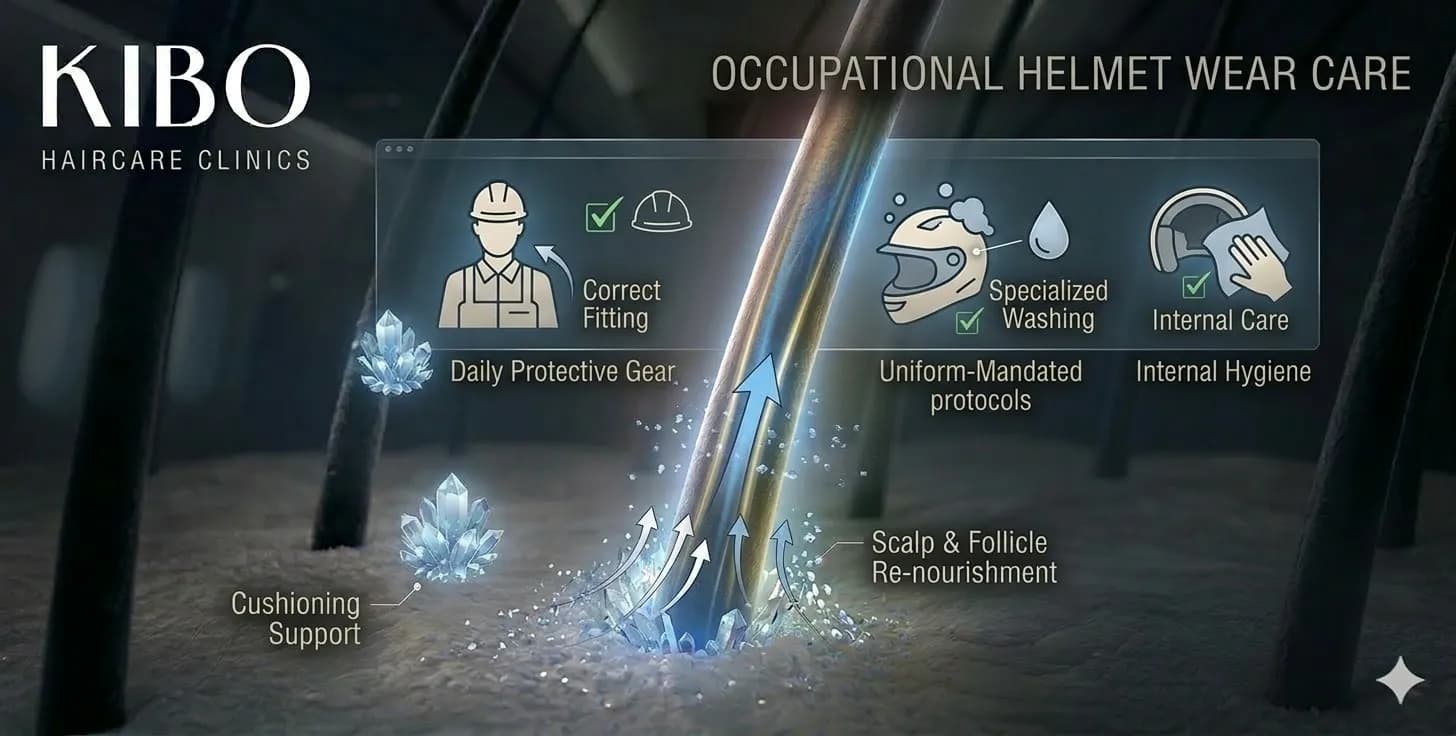
Who This Is For: Anyone who rides, drives, or works in a helmet, cap, or uniform headwear every day and wants to know whether it is costing them hair, how to protect their hair and scalp without compromising safety, and what to do about headgear after a hair transplant.
Wearing a helmet does not by itself cause genetic baldness. A tight or poorly fitting helmet, repeated friction, sweat-related irritation, or a tight hairstyle underneath it may contribute to breakage or traction-related hair loss in susceptible people. Use a correctly fitted, clean helmet, avoid tight styles underneath, keep the scalp dry and comfortable, and seek dermatology review for persistent thinning or scalp inflammation. After a transplant, follow the operating surgeon's specific headgear timeline.
The Short Answer
Ordinary helmet use does not cause androgenetic alopecia, the inherited pattern of hair loss behind most receding hairlines and thinning crowns. We searched the published literature and found no controlled evidence that it does, and none for the popular claim that a helmet "suffocates" follicles or restricts blood flow enough to kill them. What the evidence does support is narrower and more practical: tension, friction, pressure, and irritation can each cause problems of their own, and it helps to tell them apart.
| Cause | What Is Happening | What It Tends to Look Like | Outlook |
|---|---|---|---|
| Androgenetic alopecia | Inherited follicle sensitivity, unrelated to headgear | Temple recession, crown thinning, a widening part | Not caused by a helmet, but it needs a diagnosis and treatment |
| Traction alopecia | Repeated pulling on the same hairs | Thinning or broken hairs at the hairline, temples, or wherever the tension falls | Early traction often recovers once the tension stops; long-standing traction can be permanent |
| Friction breakage | Rubbing wears down the hair shaft | Short broken hairs, frizz, a rough texture | Improves with gentler handling |
| Scalp irritation | Sweat, heat, occlusion, or an existing scalp condition | Itch, scale, redness, pustules, odour | Treatable once diagnosed |
Our guides to androgenetic alopecia, male pattern baldness, and receding hairline causes explain the inherited pattern in more depth.
How Headgear Can Affect Hair and Scalp
Tension is the best-documented route. Tight hairstyles are the commonest cause of traction alopecia, according to British Association of Dermatologists (BAD) patient guidance, which names tight ponytails, buns, braids, extensions, clips, and tight headscarves, and warns that long-standing traction can destroy follicles permanently. A helmet adds its own variables, because a rim, strap, or liner that presses or drags on the hair at the hairline and temples can add to whatever tension a hairstyle underneath already creates. A tight ponytail or bun under a helmet is the combination we would most want you to avoid, and our guides to traction from tight buns and moving away from tight styles show how.
Friction and pressure matter too. Rubbing is a recognised cause of wear on the hair shaft, as a 2015 review of hair cosmetics in the International Journal of Trichology describes, and heavy or poorly fitting helmets add pressure points. The most striking published example comes from two case reports in JAAD Case Reports (2024). Two firefighters had lichen planopilaris, a scarring hair-loss condition, that appeared to progress with prolonged use of a heavy fire helmet, which the authors put at 3 to 4 pounds, through pressure and the friction of putting the helmet on and taking it off. Two cases cannot prove cause, and an occupational fire helmet is not an everyday riding helmet. The lesson we take from them is that headgear friction can aggravate an existing scalp condition, and that some scarring conditions can mimic androgenetic alopecia, which is why persistent or symptomatic thinning is worth examining, sometimes with a biopsy.
Sweat and heat are a different matter. Sweat alone does not diagnose hair loss, but prolonged moisture, heat, and rubbing can worsen discomfort and irritation, particularly if you already have a scalp condition. Persistent itch, scale, pain, pustules, redness, or odour deserves a dermatologist's assessment for dermatitis, folliculitis, or infection. Our guides to seborrheic dermatitis, scalp psoriasis versus dandruff, and sweat and hair root damage cover these in more detail.
A Safe Daily Routine
Safety comes first. A helmet that protects your head is worth more than any amount of hair, so nothing here involves loosening a strap or skipping a helmet. The steps below apply dermatology guidance on avoiding hair damage, from the American Academy of Dermatology (AAD) and the BAD, to headgear.
- Get the fit right. Follow the manufacturer's fitting instructions. If a helmet causes painful pressure points, the answer is a different size, shape, or model, not a looser strap.
- Keep hairstyles loose under the helmet. Avoid tight buns, ponytails, braids, extensions, and clips at the hairline and temples. If you tie your hair, use a loose, low-tension style with covered bands made for styling hair.
- Keep the helmet interior and any removable liner clean and dry, following the manufacturer's instructions.
- Let the scalp dry after use when practical, and handle damp hair gently: blot it with a towel instead of rubbing, and comb it with a wide-tooth comb.
- Use a cap or liner only if it fits safely and does not add pressure, heat, or friction, and check that it does not change how the helmet sits.
- Watch for symptoms: itching, scale, pain, redness, pustules, odour, broken hairs, or thinning at the hairline or temples.
Our guides to helmet use and hairline damage, headgear and follicle health, gym headbands and sweatbands, workplace hair care and hairline protection, and daily hair protection for active lifestyles go through everyday scenarios, and hair ties, scrunchies and clips compares the bands.
Headgear After a Hair Transplant
Fresh grafts are not secure in the early days, and NHS patient information advises being very careful with transplanted hair for the first two weeks. When a helmet is safe again depends on your procedure, how the grafts have settled, and how much pressure, contact, and sweating the helmet involves. That is why we do not publish a universal helmet date, and you should be wary of any website that does. ISHRS patient guidance makes the same point: aftercare timing varies among surgeons, so follow the instructions of the surgeon you chose and not a general website.
A helmet protects your head from far more serious harm than the risk to grafts, so do not skip it. Plan around it instead. If you ride a two-wheeler daily, ask the operating surgeon before your procedure how you should travel during early recovery, and ask for the answer in writing. If a helmet touches the grafts, causes pain, or you are simply unsure, contact the operating clinic before you wear it again. Our guides to helmets after a hair transplant, healing and recovery, and first-week self-care cover the rest of early recovery.
When a Helmet Is Not the Likely Cause
A widening part, temple recession, crown thinning, patchy loss, or full-length shedding is more likely to reflect a medical hair-loss disorder than your headgear, and it needs a diagnosis. Androgenetic alopecia is the commonest, but telogen effluvium, alopecia areata, and scarring conditions look different and are treated differently. See a dermatologist for persistent thinning, bald patches, pain, redness, scale, pustules, severe itch, or hair loss that continues after you have changed the mechanical factors. Our guide to dermatologist versus trichologist explains who to see and what an assessment looks for.
Thinning at the temples or hairline and not sure whether it is your helmet or something else? A scalp assessment can tell.
Kibo Clinics' Perspective on Helmets and Hair
The helmet question usually arrives with a worry underneath it: is something I do every day costing me hair? For baldness the honest answer is usually no. For tension, friction, and irritation it is sometimes yes, and all three can be reduced without giving up the protection a helmet gives.
At Kibo Clinics, our doctors believe the useful approach is to fix what can be fixed, keep safety first, and have anything persistent properly diagnosed.
If you notice thinning, patches, or a scalp that is itchy, scaly, or sore under your headgear, a dermatologist-led Kibo Clinics team can examine your scalp and tell you what is going on.
Frequently Asked Questions
Does wearing a helmet cause baldness?
No. We found no evidence that ordinary helmet use causes androgenetic alopecia. Tightness, friction, traction, or scalp inflammation can create other problems, and those are worth treating.
Can sweat under a helmet cause hair loss?
Sweat alone does not diagnose hair loss. Moisture and occlusion can aggravate irritation or existing scalp disease, while friction and tight hairstyles may contribute to breakage or traction.
Should I wear a cap under my helmet?
Only if it fits safely and does not create pressure, heat, or friction. A liner or cap must not compromise helmet fit or safety, so check with the helmet manufacturer if you are unsure.
Can I wear a helmet after a transplant?
Ask the operating surgeon. Early grafts are not secure and timing varies between patients and procedures, so do not use a generic online timeline in place of your post-operative instructions. A helmet should not be skipped for safety, so plan how you will travel during early recovery before the procedure.
How do I protect my hair if I wear a helmet every day?
Choose a correctly fitted helmet that causes no painful pressure points, keep hairstyles loose underneath, keep the helmet and liner clean and dry, let the scalp dry after use, and handle damp hair gently.
Can a helmet cause dandruff or scalp infections?
Sweat, heat, and moisture under a helmet can aggravate existing scalp conditions such as seborrheic dermatitis, which causes flaking. Persistent itch, scale, pustules, redness, or odour should be assessed for dermatitis, folliculitis, or infection.
When should I see a dermatologist?
See one for persistent thinning, bald patches, pain, redness, scale, pustules, severe itch, or hair loss that continues after changing mechanical factors.
References
We referred to the following guidelines, patient-information pages, and peer-reviewed studies when preparing this guide, and we have named them in full so that you can check them yourself.
- British Association of Dermatologists. Traction alopecia: patient information leaflet.
- American Academy of Dermatology. Stop damaging your hair. Patient guidance.
- NHS. Hair transplant (cosmetic procedures). Patient information.
- International Society of Hair Restoration Surgery. Follicular unit extraction (FUE). Patient guidance.
- Nohria A, Desai D, Ortiz C, et al. Scalp trauma in lichen planopilaris: case reports of disease progression from fire fighter helmet use. JAAD Case Rep. 2024;48:90-93.
- Gavazzoni Dias MF. Hair cosmetics: an overview. Int J Trichology. 2015;7(1):2-15.
Related Articles & Services
Hair Transplant
FUE Hair Transplant | Sapphire FUE Hair Transplant | Real-Time FUE Hair Transplant | Bio FUE Hair Transplant | Unshaven Hair Transplant | Direct Hair Transplant (DHT) | Body Hair Transplant | Corrective Hair Transplant | Hairline Correction
Hair Regrowth
Exosomes Therapy | GFC Therapy | IV Hair Boosters | Low-Level Laser Therapy | Mesotherapy for Hair Regrowth | Microneedling for Hair Regrowth | PDO Threads for Hair Regrowth | PRP Therapy
Must Read
Hair Loss Types, Symptoms, and Causes | Hair Transplant Guide | Hair Breakage Causes and Treatments | Night-Time Hair Care to Reduce Breakage
Relevant Blogs
Seasonal Clothing and Hair Friction | Backpack Straps and Hair Pulling | Sunglasses, Spectacle Frames, and Hairline Damage | Hair Accessories and Hidden Pulling | Humidity and Mechanical Hair Stress | Dust, Micro-Particles, and Scalp Health in India
Medical Disclaimer : Information from Kibo Hair Clinics is for educational purposes only. It does not replace diagnosis, trichoscopy, blood test interpretation, prescription treatment, procedure advice, or side-effect counselling from a qualified dermatologist or hair restoration doctor.