Discover expert insights on hair transplant procedures, FUE techniques, recovery tips, and hair restoration guides from Kibo's experienced team.

Most viral hair-growth oils are better understood as hair-care products than as proven treatments for medical hair loss. Coconut oil has good evidence for reducing protein loss and supporting the hair shaft; rosemary oil has one frequently cited human trial in androgenetic alopecia, but that study compared it with 2% minoxidil, had no placebo arm and cannot prove that every rosemary formulation works. Castor oil has no strong human regrowth evidence, onion evidence comes from a small older study of crude onion juice in patchy alopecia areata rather than packaged onion oil, and many viral oils such as batana or mixed Ayurvedic blends have little direct clinical evidence for common pattern hair loss. Oils can still reduce friction, improve shine and help retain length by limiting breakage. The important distinction is whether a product improves the visible hair fibre or actually changes follicle biology. Persistent widening of the part, recession, bald patches or prolonged shedding should be diagnosed instead of repeatedly changing oils.
August 18, 2026 – 5 min read

Discover the truth about hats and baldness, understand genetic versus environmental hair loss factors, learn when headwear might cause concerns, and get evidence-based guidance on protecting follicle health.
August 12, 2026 – 5 min read

Discover the truth about shaving and hair thickness, understand why this myth persists, learn what actually determines hair diameter, and find evidence-based approaches to improving hair health and appearance. Get compre
August 12, 2026 – 5 min read
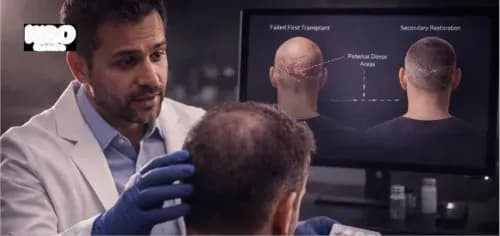
Discover when second hair transplants are possible after disappointing first results, understand common failure causes, learn evaluation criteria for corrective work, explore successful correction strategies, and get realistic guidance on achievability.
August 12, 2026 – 5 min read
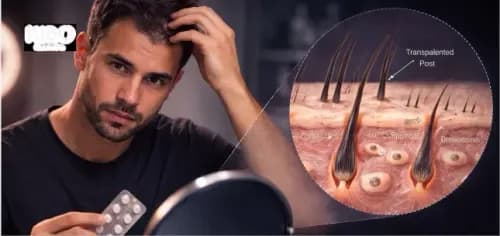
Understand why native hair continues thinning without DHT protection post-transplant, how finasteride preserves long-term results, realistic side effect risks, when medication might be optional, and strategies for sustainable maintenance.
August 12, 2026 – 5 min read
Discover practical strategies for managing hair transplant visibility during recovery, including styling techniques, safe concealment products, professional appearance tips, social navigation, and realistic expectations for the ugly duckling phase.
August 12, 2026 – 5 min read

Discover when it's safe to wear helmets after hair transplant surgery, understand risks of premature helmet use, learn protective strategies for essential commuting, identify warning signs, and get expert guidance for riders and workers requiring headgear.
August 12, 2026 – 5 min read
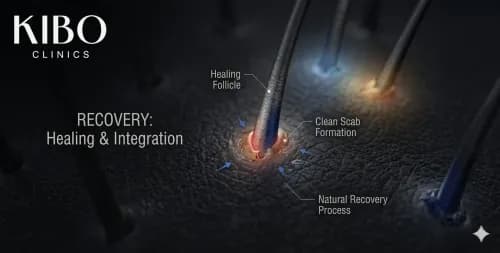
Understand why scalp itching is normal after hair transplant, discover safe ways to manage discomfort without harming grafts, learn warning signs that need attention, and get expert guidance for a comfortable recovery.
September 10, 2026 – 5 min read

Hair restoration does more than fill gaps on your scalp. It changes how you carry yourself, how you engage in conversations, and how people perceive your competence and approachability.
August 12, 2026 – 5 min read
Stress hair fall appears 2 to 3 months after the trigger sleep, protein, scalp hygiene, and cortisol reduction stop most future episodes before they start.
August 12, 2026 – 5 min read
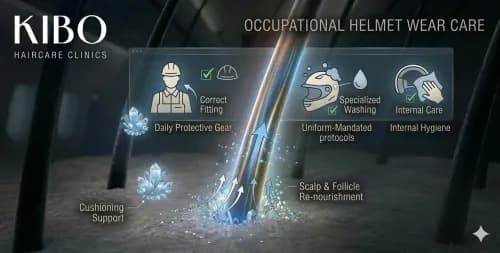
Hair loss from helmet and uniform use comes from sweat-trapped inflammation and daily traction a breathable liner, weekly liner washing, and loosened post-duty hairstyle stops most of it.
August 12, 2026 – 5 min read
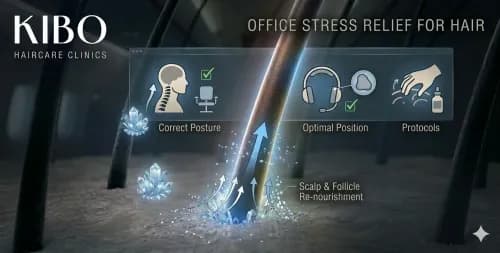
Workplace stress accelerates DHT driven hairline and crown thinning by compressing years of genetic progression into months small daily habit corrections slow it significantly.
August 12, 2026 – 5 min read
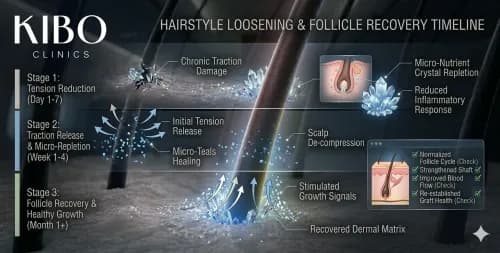
Traction alopecia recovery is possible in most early cases the shock shedding after removing tight styles is accumulated telogen hair releasing, not new follicle damage.
August 12, 2026 – 5 min read
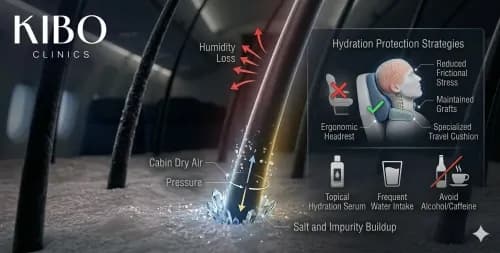
Cabin air below 20% humidity strips moisture from scalp and hair throughout the flight a loose braid, satin scarf, and pre-board serum prevent most of the damage.
August 12, 2026 – 5 min read
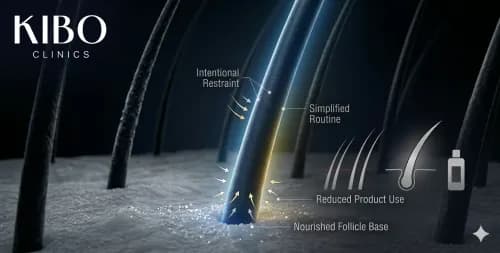
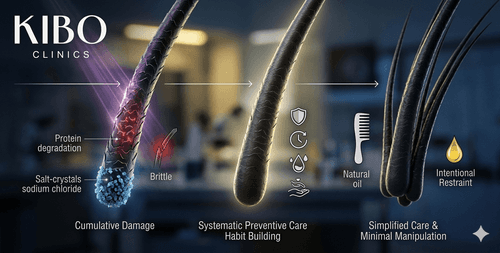
Minimalist hair care works because product overload keeps the scalp barrier in constant recovery fewer well-chosen products used consistently outperforms constant experimental switching.
August 12, 2026 – 5 min read
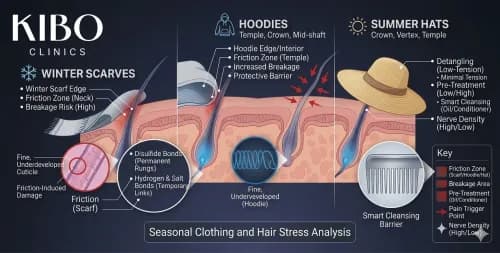
Winter causes hair fall through reduced sebum, woollen static, sweat-trapping caps, and lower vitamin D not cold air alone, and mostly reversible within 2 to 3 months.
August 12, 2026 – 5 min read
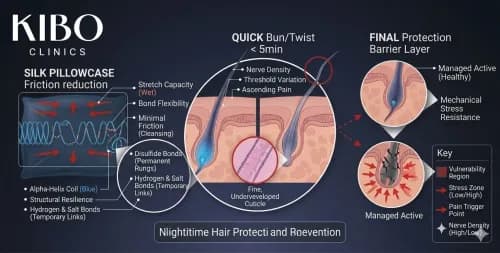
Most hair fall on your pillow is breakage from wet hair and cotton friction not root-level shedding. A satin pillowcase and dry hair before bed fixes it in weeks.
August 12, 2026 – 5 min read
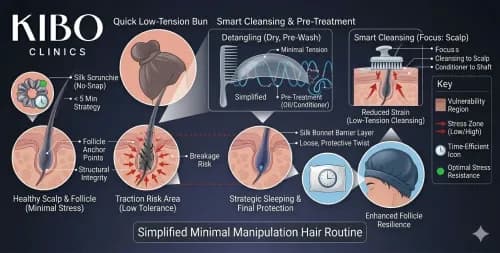
A 5-minute daily routine covering protein, sleep, and mild washing prevents most stress-driven hair fall in busy professionals without adding pressure to the schedule.
August 12, 2026 – 5 min read
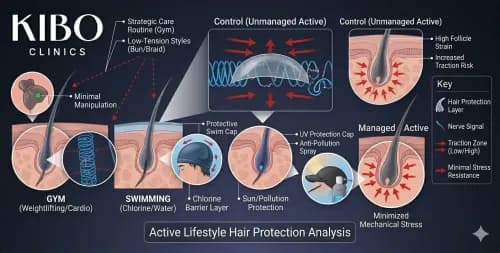
Sweat, UV, tight workout hairstyles, and over-washing compound daily to damage hair a structured post-workout routine prevents most of it.
August 12, 2026 – 5 min read
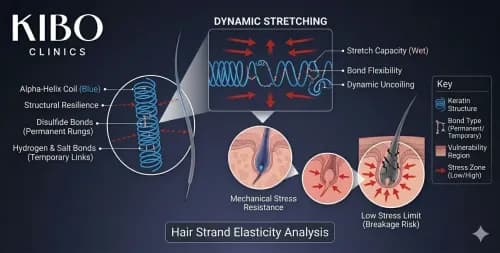
Hair elasticity fails when disulfide bonds in the cortex weaken causing strands to snap instead of stretch, from heat, chemicals, or nutritional deficiency.
August 12, 2026 – 5 min read
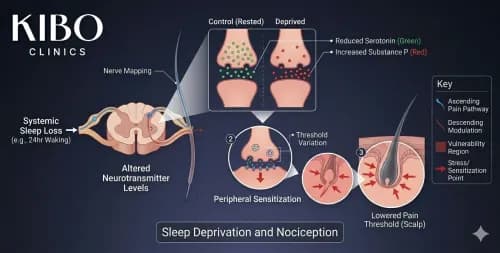
Scalp sensitivity lowers the tension threshold where normal styling causes follicle pain and inflammation the earliest warning sign of traction alopecia.
August 12, 2026 – 5 min read
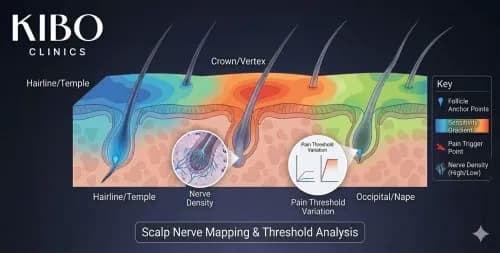
Freshly regrown baby hairs are fragile and easily damaged by heat or tight styling. Learn how to nurture new growth during the recovery phase to ensure these immature strands develop into strong, healthy terminal hair daily.
August 12, 2026 – 5 min read
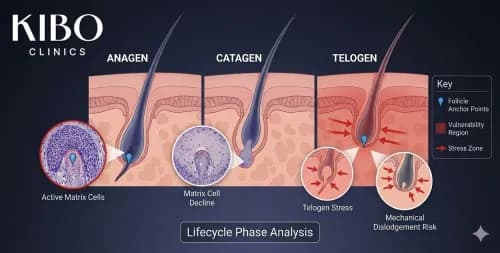
The hair growth cycle moves through anagen (growth), catagen (transition), and telogen (resting) and most alarming shedding is simply mechanical release of telogen-phase hair
September 21, 2026 – 5 min read
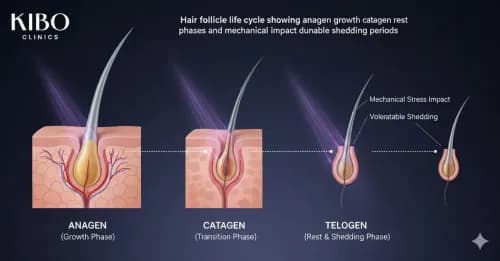
Hair density and hair strength look identical when they fail both make hair appear thin but density loss is a follicle problem treated clinically, while strength loss is a shaft problem.
August 12, 2026 – 5 min read
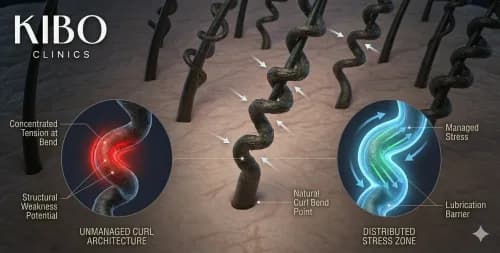
Curly and coily hair can break more easily because its bends, twists and variable cross-sectional shape create points where mechanical stress concentrates. Dermatology references also note that natural scalp oil travels less evenly along a curved strand, so the lengths may be drier and more vulnerable to friction.
August 12, 2026 – 5 min read
YOUR HAIR JOURNEY STARTS HERE