
Does Shaving Your Head Make Hair Grow Back Thicker?
Published on Fri Apr 10 2026
You run your hand over freshly shaved stubble and it feels rough, darker, and stronger. It’s natural to wonder if shaving has made your hair grow back thicker. The short answer is no. Shaving cuts hair at the surface of the skin and does not change the follicle, growth rate, thickness, or density of new hair.
When hair regrows after shaving, the blunt tip of the cut strand makes it feel coarse. As it grows longer, the natural tapered end returns, and the hair feels softer again. Many people confuse this temporary texture change with real thickness. Understanding how hair actually grows helps clear this common myth.
Why Do So Many People Believe Shaving Makes Hair Thicker?
Rohit, a 24-year-old from Pune, shaved his head during summer because of heat and sweat. Within two weeks, he noticed short, stiff stubble and felt his hair looked darker than before. Friends commented that his hair seemed “stronger.” He assumed shaving had improved his hair quality.
Over the next two months, as his hair grew longer, the texture felt normal again. The thickness and density looked the same as before shaving. What changed was only the length and the shape of the hair shaft, not the number or strength of hair follicles.
This experience is common. The belief usually starts in teenage years when boys shave for the first time and see thicker-looking facial hair. In reality, hormones at puberty are responsible for thicker hair, not the act of shaving.
How Does Hair Actually Grow From the Scalp?
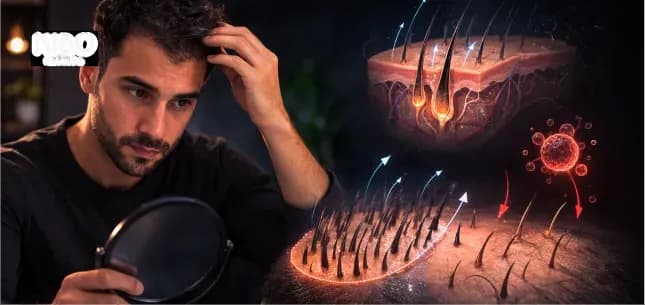
Hair growth begins under the skin in tiny structures called follicles. Each follicle produces one strand of hair. The thickness and growth rate are determined by genetics, hormones, nutrition, and overall scalp health.
Healthy scalp skin supports proper blood circulation. Good circulation supplies oxygen and nutrients to follicles. When follicles receive consistent nourishment, they produce normal hair strands.
Hormones, especially androgens like testosterone, influence hair thickness and growth pattern. In some people, sensitivity to these hormones causes follicles to shrink over time, leading to thinning hair.
Lifestyle factors such as stress, poor diet, smoking, pollution, and harsh hair treatments can affect scalp condition. But shaving only removes hair above the skin surface. It does not reach the follicle or alter its structure.
What Changes After You Shave?
When hair is shaved, it is cut straight across. Natural hair strands have a tapered, softer tip. After shaving, the blunt edge feels rough when touched.
Short hair also stands upright, making it appear denser. Dark hair against light scalp skin can look more noticeable during early regrowth.
As hair grows longer, the ends naturally taper again, and the appearance returns to normal.
What Happens If You Shave Repeatedly?
Some people shave their heads regularly, believing it will improve density over time. Repeated shaving still does not change:
- Number of follicles
- Size of follicles
- Growth speed
- Natural thickness of each strand
However, shaving too frequently without proper scalp care can cause irritation. Razor burns, ingrown hairs, and minor cuts may occur if hygiene is poor.
Both men and women may choose to shave for style, comfort, or cultural reasons. But expectations about thicker regrowth should be realistic.
How Does Shaving Show in Men and Women?
In men, shaving the scalp is often linked to style or managing hair thinning. Since men typically have thicker terminal hair due to testosterone, regrowth may appear darker and more noticeable.
In women, head shaving is less common but may be done for personal, medical, or spiritual reasons. Women’s hair regrowth follows the same biological rules. It does not become thicker due to shaving.
Hormonal differences affect natural hair patterns between men and women. But shaving itself has no gender-based impact on follicle behavior.
What Daily Habits Make It Better or Worse?
Poor shaving technique can irritate the scalp.
Using blunt razors increases the risk of cuts and inflammation.
Dry shaving without lubrication can damage the outer skin barrier.
Not cleaning the scalp properly after shaving may lead to clogged pores or infections.
On the helpful side:
Using a clean, sharp razor reduces friction.
Shaving in the direction of hair growth lowers irritation.
Moisturising the scalp supports skin healing.
Using sunscreen on a shaved scalp prevents sunburn, which can damage skin health.
Ignoring scalp care after shaving may cause dryness and flaking. Healthy scalp skin supports healthy follicles, even though shaving does not affect thickness.
What Helps First? (Relief Steps)
If you experience rough or itchy regrowth after shaving:
Apply a gentle, alcohol-free moisturiser daily.
Avoid scratching short stubble to prevent follicle irritation.
Use mild shampoo to keep the scalp clean.
If there is redness or small bumps, allow the skin to heal before the next shave.
Most post-shave irritation settles within 3 to 7 days. Hair texture feels softer once it grows beyond the blunt-cut stage, usually in 2 to 3 weeks.
When to Meet a Hair Specialist
Consult a specialist if you notice:
Hair thinning that continues after regrowth.
Patchy hair loss.
Excessive hair shedding beyond 100 strands per day.
Red, painful, or infected scalp areas.
Family history of early baldness with rapid hairline recession.
Shaving does not cause hair loss. But it may make underlying thinning more visible because hair is cut short evenly across the scalp.
Common Myths About Does Shaving Your Head Make Hair Grow Back Thicker
Myth 1: Shaving increases the number of hair follicles.
Follicle numbers are fixed before birth. Shaving cannot create new follicles.
Myth 2: Hair grows faster after shaving.
Growth rate is controlled by genetics and hormones, not cutting.
Myth 3: Shaving strengthens weak hair.
Strength comes from follicle health and nutrition, not from trimming.
Myth 4: Babies’ hair grows thicker if shaved early.
Infant hair changes naturally with age. Shaving does not influence future density.
Myth 5: Frequent shaving can reverse baldness.
Male and female pattern hair loss are driven by hormonal sensitivity, not hair length.
Why Kibo Clinics for Hair Thinning and Hair Loss Concerns
Many patients choose Kibo Clinics for hair thinning concerns because our approach addresses both scalp health and long-term planning. We begin with comprehensive scalp assessment, hair and follicle analysis, and thorough lifestyle and environmental review.
Our No Ghost Surgery pledge ensures the consulting surgeon personally performs your entire procedure, maintaining consistent quality throughout the session. We don't delegate critical steps to technicians.
The Kibo Hair Analysis (scalp and follicle assessment) is the first step in understanding your specific condition. We provide education, guidance, and support without guarantees, exaggerated claims, or miracle cure promises.
For patients who need structured treatment, we offer monitored solutions such as PRP therapy, IV hair boosters, and hair transplant planning when appropriate. Our team provides 12-month monitoring and follow-up support to track progress and adjust treatment plans responsibly.
---
If you are shaving to manage thinning hair or are unsure about early hair loss signs, a professional scalp analysis can give clarity before the problem progresses.
---
Frequently Asked Questions
Does shaving your head change hair thickness permanently?
No. Shaving only cuts hair at skin level. It does not affect the follicle where hair is produced. Thickness, density, and growth speed remain the same. The blunt tip of regrowing hair may feel coarse for a few weeks, but this is temporary.
Why does hair feel rough after shaving?
Freshly shaved hair has a straight, blunt edge. This edge feels stiffer compared to the natural tapered tip of uncut hair. As hair grows longer, the texture softens again. The internal structure of the strand does not change.
Can shaving help with hair loss?
Shaving does not treat hair loss. It may create a uniform look that makes thinning less noticeable. However, it does not stop hormonal or genetic hair loss. Professional evaluation is needed for ongoing thinning.
Does shaving increase hair growth speed?
No. Hair grows at an average rate of about 1 to 1.5 cm per month. This rate is determined by genetics, hormones, and health factors. Shaving does not accelerate the growth cycle.
Is it safe to shave your head regularly?
Yes, if done properly with hygiene and scalp care. Using clean razors and moisturising reduces irritation. However, repeated poor shaving practices can cause cuts or ingrown hairs.
Does shaving affect grey hair growth?
No. Grey hair appears due to reduced melanin production in follicles. Shaving does not change pigment production. Regrown grey hair may look more noticeable when short.
Will shaving damage hair follicles?
Normal shaving does not reach deep enough to damage follicles. Only deep cuts, scarring, or infections can affect follicle health. Gentle technique keeps the scalp safe.
Should women avoid shaving their heads?
Women can shave their heads safely if they choose to. It will not affect future hair thickness or density. Hormonal health and genetics determine long-term hair quality.
Disclaimer
This content is for informational purposes only and does not substitute personalized medical advice. Hair growth patterns vary between individuals based on genetics, hormones, nutrition, and medical conditions. Shaving does not alter follicle structure, but underlying hair loss conditions may require professional evaluation. Treatment responses differ from person to person, and no outcome can be guaranteed. Always consult a qualified specialist for personalized guidance.
Hair Transplant
FUE Hair Transplant | Sapphire FUE | Direct Hair Transplant | Bio FUE | Corrective Transplant
Hair Regrowth
PRP Therapy | GFC Therapy | Mesotherapy | Microneedling
Must Read
Hair Transplant Guide | FUE Complete Guide | Procedure Steps | Results Timeline | Norwood Scale
Relevant Blogs
Hair Myths Busted | Hair Breakage Guide | DHT Blockers | Kibo Experience
---