
Can Hair Grow Back After Alopecia Areata?
Published on Fri Jul 17 2026
Reviewed By:
Shritej Mali
Independent Research Reviewer
Reviewing peer-reviewed studies and medical literature for evidence-based accuracy.
Written By: Kibo Clinics Content Team
Sources Referenced: NIAMS, British Association of Dermatologists living guideline, international guideline comparison, systematic review of PRP trials, recognised clinical references
Last Updated: July 17, 2026
Reading Time: 11 minutes
֎ Show Quick Answer
AI Quick answer summary
- Yes, hair can grow back after alopecia areata: the condition usually does not destroy the follicle, so regrowth remains biologically possible.
- Regrowth cannot be guaranteed: mild, recent patchy loss generally has a better outlook than long-standing, extensive loss, alopecia totalis or alopecia universalis.
- Steroids are established first-line treatments: topical steroids are commonly used for scalp disease, while small patches in adults may be treated with carefully placed steroid injections.
- PRP has promising but lower-certainty evidence: small trials suggest possible benefit, but it should not be presented as a proven replacement for guideline-supported treatment.
- Relapse is possible even after full regrowth: a dermatologist should confirm the diagnosis, assess disease activity and discuss realistic monitoring.
Not sure whether a smooth patch is alopecia areata or another condition?
Can Hair Grow Back After Alopecia Areata?
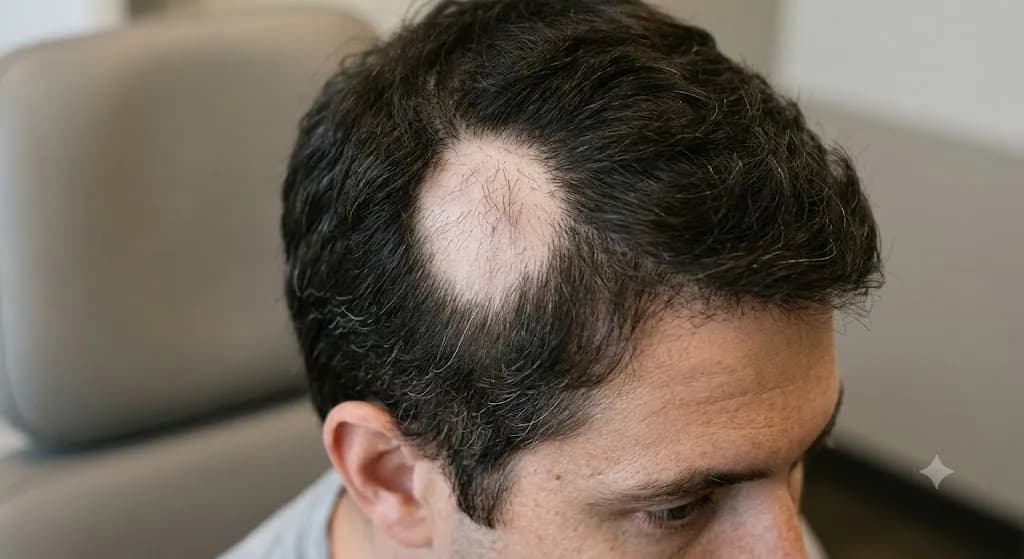
Hair often can grow back after alopecia areata because the follicles usually remain present beneath the skin. The immune system interrupts active growth, but it does not normally replace follicles with scar tissue. Some people recover without treatment, some regrow faster with treatment, and others have incomplete or repeated episodes.
The honest answer depends on how much hair is affected, how long the condition has been active, whether the nails are involved, the age at which it began and whether the pattern is limited patches or extensive loss. Early fine, pale or white hairs can be a normal first sign of alopecia areata and hair density recovery.
Why Regrowth Is Possible
Alopecia areata is an autoimmune, non-scarring form of hair loss. Immune activity gathers around growing follicles and pushes them out of the active growth phase. In most cases, the follicular opening remains visible and the growth structure is not permanently destroyed. When the immune activity settles, the same follicle may produce hair again.
This is different from scarring alopecia, where inflammation can permanently replace follicles with scar tissue. It is also different from stress-related hair shedding, fungal infection, traction damage and pattern thinning. Diagnosis matters because the regrowth plan is not interchangeable.
What Are the Chances of Regrowth?
No single percentage can accurately predict an individual result. Current guidance describes alopecia areata as unpredictable. Limited, recent patches tend to have a more favourable course, while extensive or long-standing disease is harder to treat and more likely to relapse.
| Clinical situation | What it may mean for regrowth | Why assessment matters |
|---|---|---|
| One or a few recent patches | Regrowth is often possible, including spontaneous regrowth | Confirms diagnosis and whether observation or treatment is appropriate |
| Rapidly increasing patches | The condition is active, so early review is useful | Treatment choice may need to match speed and extent |
| Loss of most scalp hair | Regrowth remains possible but is less predictable | Systemic treatment and monitoring may be discussed |
| Nail pitting or early childhood onset | May be associated with a more persistent course | Helps set realistic expectations and follow-up |
How Long Does Alopecia Regrowth Take?
Visible regrowth may begin within weeks to months, but there is no fixed deadline. New hair often starts as soft, fine or lighter hair and may gradually become thicker and darker. One patch can respond before another because follicles are not synchronised.
A lack of immediate change does not prove permanent loss. Treatment response is usually judged over planned review intervals, not day by day. Consistent photographs can make subtle progress easier to see. Use the same lighting, angle and hair length when tracking hair growth with monthly photos.
Do Steroids Help Alopecia Areata Regrow?
Corticosteroids reduce inflammatory immune activity around follicles. They are established treatments, but the formulation depends on age, location, extent and speed of progression.
Topical corticosteroids
Current dermatology guidance supports potent or very potent topical corticosteroids as first-line treatment for scalp alopecia areata. The application area, treatment cycle and review schedule must be medically supervised because strong steroids can thin the skin or cause other local effects when misused.
Steroid injections into patches
For adults with limited mild-to-moderate patches, intralesional triamcinolone is a guideline-supported first-line option. The medicine is placed in small amounts across the patch. Local skin or fat thinning can occur, especially with excessive concentration, volume or repeated injections at sensitive sites.
Oral or systemic steroids
Short courses may be considered for rapidly progressive or more extensive disease. They are not simple long-term hair-growth medicines. Whole-body side effects and relapse after stopping are important limitations, so systemic treatment needs a dermatologist-led risk-benefit discussion.
Can PRP Help Alopecia Areata?
PRP may help some people with patchy alopecia areata, but the evidence is not strong enough to guarantee regrowth or replace established therapy. PRP is prepared from the patient's blood and injected into selected scalp areas. Small randomised trials and a systematic review found promising results, but the studies were few, protocols varied and certainty remained limited.
PRP is better established in pattern hair loss than in autoimmune alopecia. For alopecia areata, it should be considered only after diagnosis and a clear discussion of alternatives, discomfort, cost, the number of sessions and the possibility of no response. Read the evidence differences in PRP versus PRF and GFC versus PRP before comparing procedures.
Steroids vs PRP for Alopecia Regrowth
| Point | Corticosteroids | PRP |
|---|---|---|
| Evidence position | Guideline-supported first-line treatment in suitable cases | Promising adjunct with fewer and smaller trials |
| Main aim | Reduce autoimmune inflammation | Deliver platelet-derived signals to the treated area |
| Common limitations | Skin thinning locally; systemic adverse effects with oral treatment | Pain, cost, protocol variation and uncertain response |
| Best decision route | Chosen by disease extent, site, age and activity | Considered selectively after diagnosis and evidence discussion |
What Else May Be Used?
Treatment is not limited to steroids and PRP. Depending on severity, a dermatologist may discuss contact immunotherapy, minoxidil as an adjunct, steroid-sparing medicines or newer targeted systemic treatments. The correct option depends on the diagnosis and extent, not on which procedure is most heavily advertised.
Nutrient treatment is useful only when a true deficiency or another contributing problem is present. Targeted blood tests for hair fall may be considered when history or examination suggests thyroid disease, iron deficiency or another condition. Read about vitamin D and hair follicles, iron deficiency and hair thinning and biotin and hair growth before taking supplements without a diagnosis.
Signs That Hair Is Growing Back
- Fine, soft or pale hairs appearing inside the smooth patch
- Short hairs becoming longer and more visible over successive photographs
- Reduced enlargement of the existing patch
- Fewer new patches developing
- Gradual return of pigment and thickness, although colour may change temporarily
Broken hairs at the edge, black dots or continuing expansion may indicate active disease rather than stable recovery. A scalp examination or trichoscopy can clarify this.
What Can Reduce the Chance of Complete Regrowth?
- Extensive scalp or body involvement
- Alopecia totalis or alopecia universalis
- Long-standing disease
- Repeated relapses
- Onset in early childhood
- Nail pitting or other nail changes
- An ophiasis pattern around the sides and back of the scalp
These factors do not prove that regrowth is impossible. They help the clinician explain uncertainty and choose a proportionate treatment plan.
Can Oils, Shaving or Home Remedies Restart Growth?
Shaving changes the length of hair above the skin but does not stop the autoimmune attack. Oils may condition the hair shaft or reduce dryness, but they have not been shown to switch off alopecia areata. Review the difference between cosmetic effects and follicular treatment in hair regrowth oils and evidence, onion juice for hair growth and rosemary oil for hair growth.
When Should You Book a Dermatology Consultation?
Arrange an assessment when a smooth patch appears suddenly, patches are expanding, eyebrows or beard hair are affected, nails develop pits, or the diagnosis is uncertain. Redness, scale, pain, pus or scarring need prompt review because they are not typical of uncomplicated alopecia areata.
A clinician may distinguish alopecia areata from scalp psoriasis and dandruff, seborrhoeic dermatitis, fungal infection, traction loss or hair loss in women. When choosing between professionals, see the guide to a dermatologist versus trichologist.
What This Means for You
Alopecia areata often leaves the follicle capable of producing hair again, so regrowth is a realistic possibility. The uncertainty is whether it will happen fully, how quickly it will happen and whether the loss will recur.
For a small recent patch, your plan may range from careful observation to topical or injected corticosteroids. PRP can be discussed as a selective adjunct, but it should be presented with its evidence limits. The most useful first step is a diagnosis-led consultation, not a package of procedures chosen before the condition is confirmed.
Need a realistic regrowth assessment for a patch or recurring hair loss?
Frequently Asked Questions
Can alopecia areata hair grow back naturally?
Yes. Limited alopecia areata can regrow without treatment because the follicles are usually not scarred. Natural recovery is unpredictable, and new loss can still occur later.
How long does alopecia areata take to grow back?
Regrowth may begin within weeks or take several months. Fine, pale hairs often appear first and may gradually become thicker and darker.
Do steroid injections regrow hair in alopecia areata?
They can stimulate regrowth in suitable adults with limited patches and are a guideline-supported first-line option. Response varies, and incorrect dosing can cause local skin or fat thinning.
Are topical steroids effective for alopecia areata?
Potent topical corticosteroids are commonly recommended first-line for scalp alopecia areata. They need a defined treatment and review plan because prolonged or incorrect use can cause side effects.
Is PRP effective for alopecia areata?
PRP has promising results from small trials, but evidence remains limited and protocols differ. It should be discussed as a selective option rather than a guaranteed cure or a proven replacement for standard treatment.
Can alopecia areata come back after regrowth?
Yes. Hair can regrow fully and later fall again because alopecia areata can relapse. Follow-up is based on new patches, disease activity and the effect on quality of life.
Does white hair mean alopecia areata is recovering?
Fine white or pale hair can be an early regrowth sign. Pigment may return later, although colour and texture do not always return in the same way.
Can alopecia totalis hair grow back?
Regrowth is possible, but complete scalp loss is generally harder to treat and less predictable than a few small patches. A dermatologist may discuss systemic or targeted treatments.
Should I use minoxidil for alopecia areata?
Minoxidil may be used as an adjunct in some plans, but it does not directly switch off the autoimmune process. It should not replace diagnosis or disease-directed treatment.
Is a hair transplant suitable for active alopecia areata?
Usually not while the autoimmune condition is active because transplanted and existing follicles may be affected. Surgery requires careful specialist assessment and sustained disease stability.
What tests are needed for alopecia areata?
Many cases are diagnosed clinically. Blood tests, fungal testing or a biopsy may be considered when the pattern is unclear or another condition is suspected.
Can stress cause alopecia areata?
Stress may coincide with onset or recurrence in some people, but it is not the sole cause. Alopecia areata is an autoimmune disease influenced by several factors.
Want a diagnosis-led alopecia regrowth plan?
Why Kibo Clinics
Kibo Clinics starts by identifying the type and activity of hair loss before discussing procedures. A consultation can assess whether a smooth patch is consistent with alopecia areata, whether another diagnosis needs to be excluded and which options have a reasonable evidence base for that situation.
The doctor who conducts your consultation is the same doctor who handles your treatment through every stage.
Medical Disclaimer
This article is for educational purposes only and does not diagnose alopecia areata or recommend a personal treatment. Regrowth, relapse, treatment response and side effects vary. Steroids, PRP and systemic medicines require assessment by a qualified medical professional.
Sources referenced: National Institute of Arthritis and Musculoskeletal and Skin Diseases, Alopecia Areata, updated 2024; Harries MJ et al., British Association of Dermatologists living guideline for managing people with alopecia areata, British Journal of Dermatology, 2026; Kropidłowska J et al., Comparison of Current International Guidelines for the Management of Alopecia Areata, 2025; Kaiser M et al., Platelet-Rich Plasma in Alopecia Areata: A Systematic Review and Meta-Analysis of Randomized Clinical Trials, Biomedicines, 2022; Cleveland Clinic, Alopecia Areata: Symptoms, Causes, Treatment and Regrowth, medically reviewed 2023.
For a personal assessment, consult a Board Certified Doctor at Kibo Clinics. The doctor you meet in your consultation is the same doctor who handles your treatment through every stage.
Explore Kibo Clinic Services
Hair Transplant: FUE Hair Transplant | Sapphire FUE | Direct Hair Transplant | Bio FUE | Real Time FUE | Corrective Hair Transplant | Hairline Correction | Unshaven Hair Transplant | Body Hair Transplant
Non-Surgical: PRP Therapy | GFC Therapy | Mesotherapy | Microneedling | Low-Level Laser Therapy | IV Hair Boosters | PDO Threads | Exosome Therapy
Explore More
Hair Loss Diagnosis: Male Pattern Baldness Explained | DHT Blockers Guide | Postpartum Hair Loss Recovery | Menopause and Hair Density
Scalp and Trigger Guides: Scalp Detox and Product Buildup | Dandruff and Hair Loss | Hair Loss in Mumbai | Hard Water and Hair Loss
Non-Surgical Decisions: Minoxidil 5% vs 10% | Mesotherapy for Hair Loss | LLLT Hair Helmet Therapy | Microneedling vs Dermarolling
Transplant Planning: Hair Transplant Side Effects | FUE Hair Transplant Guide | Hair Transplant Results Timeline | Hair Transplant Longevity